Tag: book recommendations

Susie’s SFF Book Advent 2025

Wishing everyone all the very best for a festive season filled with joy and wonder, and books. And for those looking for some inspiration, here’s a few of my favourite reads for the SFF Book Advent 2025, in no particular order…
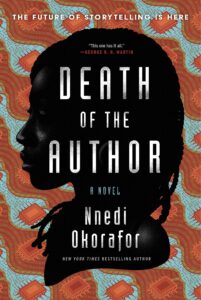
Day 24 of Book Advent – Death of the Author by Nnedi Okorafor. Zelu’s mother was a Yoruba princess, her father is Igbo with a PhD. She is paraplegic, flawed, sassy, hard-working, and an author, writing robots into a complex world of death, circuits, energy and what it means to be human.

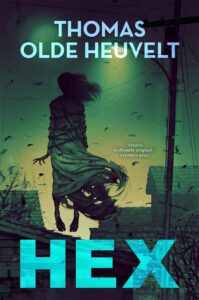
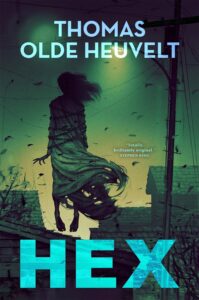
Day 23 of Book Advent – Hex by Thomas Olde Heuvelt. A 17th century woman accused of witchcraft in the days of puritanical colonies, changed, eyes and mouth sewn shut, haunts the town of Black Spring. The townsfolk’s responses are fascinating and chilling. Brilliant and horrifying read.

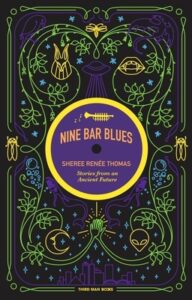
Day 22 of Book Advent – Nine Bar Blues by Sheree Renee Thomas. Golden mermaids, curse-bound sisterhoods, poisoned landscapes and an otherworldly earth. Evocative, inventive and contemporary tales that haunt, uplift and ascend, while moving with the rhythm of cultural change.

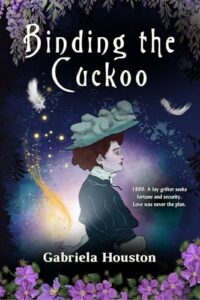
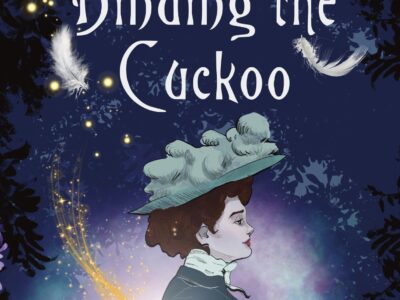
Day 21 of Book Advent – Binding the Cuckoo by Gabriela Houston. In high society London, Hare must keep her mythic status secret, in this historical romantasy where fae and human collide and Eastern European folklore is brought to life. A vivid and magical tale beautifully told.
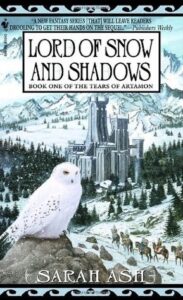
Day 20 of Book Advent – Lord of Snow and Shadows by Sarah Ash. In the wintry kingdom of Azhkendir, Gavril must face his true identity, and uncover the truth of the shadow. With a vivid & fearless supporting cast, this fantasy is a masterclass. A wonderful winter read.

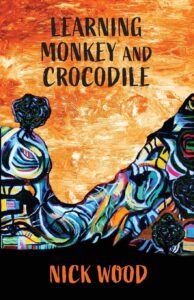
Day 19 of Book Advent – Learning Monkey and Crocodile by Nick Wood. Collection of shorts with immersive African landscapes, vivid imagery, and a rich tapestry of imagination, folklore, dread and desire. A clear and inventive lens, astute, innovative and unique.

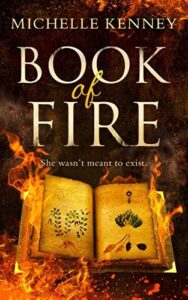
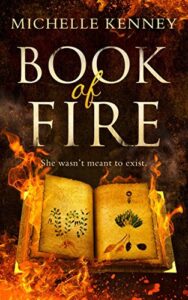
Day 18 of Book Advent – Book of Fire by Michelle Kenney. Talia and her friends navigate the ultimate rescue mission in a cataclysmic world. Feral people, hidden forests and a holy war. Lifedome is a landmark, monsters can be heroes, and fantasy, science and mythology form a perfect blend.

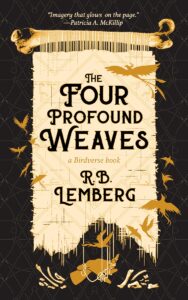
Day 17 of Book Advent – The Four Profound Weaves by R.B. Lemberg. Weaves woven from wind to signify change, invisible threads woven into whispered weaves, a search for the weave of death, and a Nameless Man searching for his name amid his journey of transformation.
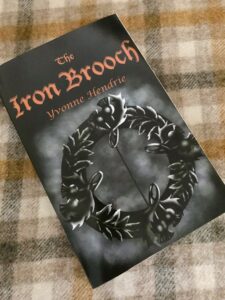
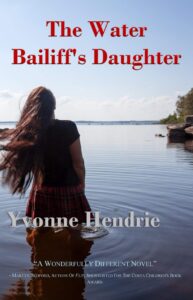
Day 16 of Book Advent – The Iron Brooch by Yvonne Hendrie. 1940s London, Brigid receives a mysterious heirloom as her something old on her wedding day. Strange callings bring visions of Scotland’s Doon Hill, time slips, the veil grows thin to mysterious fae, & Scotland awaits.

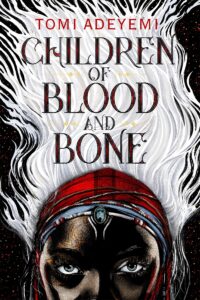
Day 15 of Book Advent – Children of Blood & Bone by Tomi Adeyemi. The soil of Orisha once hummed with magic, but the maji were killed. Now danger lurks, snow leoponaires prowl and vengeful spirits wait in the waters, as Zelie & her companions head a quest to see magic restored.

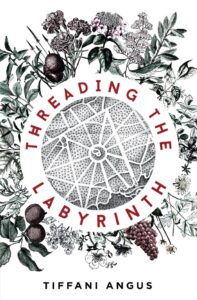
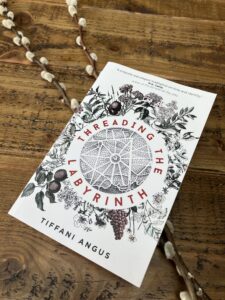
Day 14 of Book Advent – Threading the Labyrinth by Tiffani Angus. American Arts dealer, Toni, uncovers her inheritance in a haunted Manor House, where mysterious gardens change in twilight, revealing ghosts from the past. A rich, immersive & haunting read.

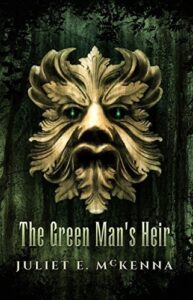
Day 13 of Book Advent – The Green Man’s Heir by Juliet McKenna. Contemporary fantasy rooted in ancient myth & British folklore. The son of a dryad seeks to understand his heritage while his sights are drawn to mysterious other realms. Meanwhile, there is a murder case to solve.
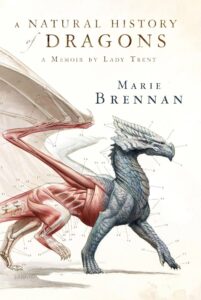
Day 12 of Book Advent – A Natural History of Dragons by Marie Brennan. Lady Isabella Trent defies Victorian conventions with her love of books, natural history & dragons. From childhood obsession collecting sparklings, to a dragon-finding expedition to the mountains of Vystrana.

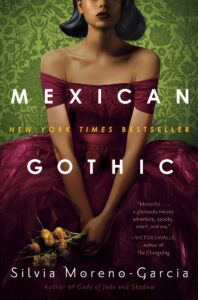
Day 11 of Book Advent – Mexican Gothic by Silvia Moreno-Garcia. 1950s Mexico: a remote mansion, an eccentric macabre family set a menacing scene of wealth, fading empire, & family secrets of violence and madness. Noemi fights to stand her ground, but the family’s indomitable will is strong.

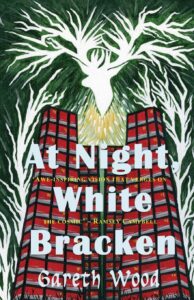
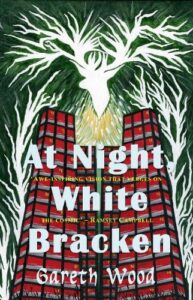
Day 10 of Book Advent – At Night White Bracken by Gareth Wood. Realities collide, dread & merriment entwine, in a world of malevolent, sinister magic. Cosmic horror blending magic with pallid reality. A horrifying, brilliantly inventive, thought-provoking tale beautifully told.

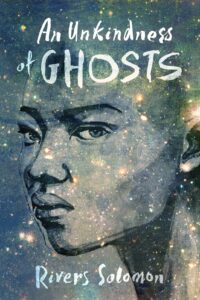
Day 9 of Book Advent – An Unkindness of Ghosts by Rivers Solomon. An extraordinary MC, flawed, self-effacing, courageous, fierce and with a huge heart. On board a space ship organised like the Antebellum south, Aster works to sow the seeds of civil war. Deeply memorable.
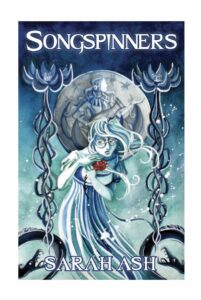
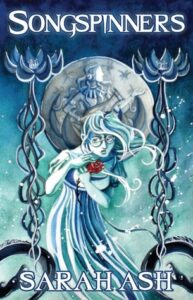
Day 8 of Book Advent – Songspinners by Sarah Ash. Architects of an ancient Undercity lost to myth; a world of mystical reservoirs, musical telepathy, faeries & dragonfly, where music is forbidden, yet flows like water from Orial. Intricately woven, evocative and beautiful.

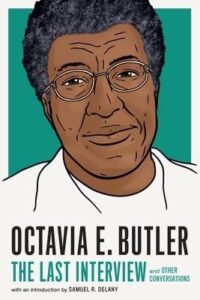
Day 7 of Book Advent – Octavia E. Butler, The Last Interview. I savoured every word. ‘Feminism is freedom. It’s the freedom to be who you are and not who someone else wants you to be. And science fiction? Science fiction is wide open. You can go anywhere your imagination can go.’

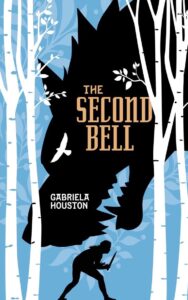
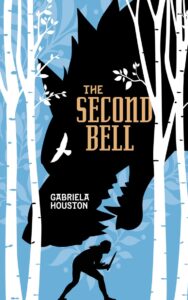
Day 6 of Book Advent – The Second Bell by Gabriela Houston, one of my all-time fave reads. Salka was born a striga, a girl with two hearts. In a world that believes her to be a monster, she is considered a demon, abandoned into exile. But Salka is drawn to her true nature.

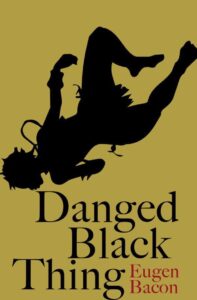
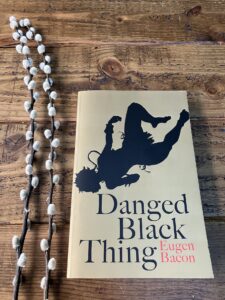
Day 5 of Book Advent – Danged Black Thing by Eugen Bacon, a unique & inventive collection of shorts traversing the west & Africa, bringing tales of migration, gender & class, patriarchy & womanhood, pushing boundaries of creativity & science, revenge, aliens, ancestors & beasts.
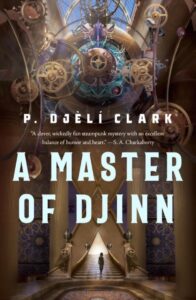
Day 4 of Book Advent – A Master of Djinn by P.Djeli Clark, with a secret brotherhood, a Soudanese mystic, an assassin with powerful magic, sorcery conjured in hookah smoke, gold masks, ghouls & elemental djinn, this is a mystical tale of identity, exploitation, oppression & magic.

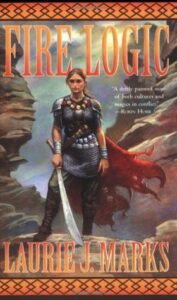
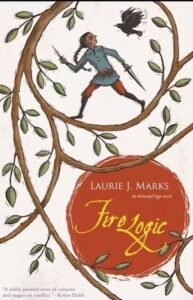
Day 3 of Book Advent – Fire Logic by Laurie Marks, epic war fantasy with guerrilla warfare among the farmsteads and iron workers, with a wonderfully diverse cast reflecting the equality they are fighting for, and elemental magic and touches of fantasy bringing colour to life.

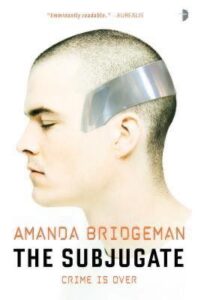
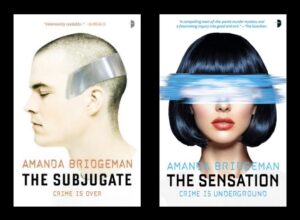
Day 2 of Book Advent – The Subjugate by Amanda Bridgeman; in a watchful world humanity is complemented by AI, cities are ruled by security companies, murder is commonplace & violent criminals face extreme ‘treatments’. An intriguing future dystopia tackling big questions.

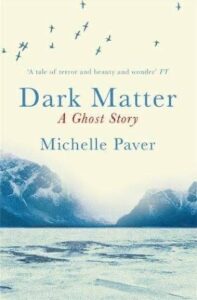
Day 1 of Book Advent – Dark Matter by Michelle Paver, deliciously creepy & atmospheric, with Jack Miller on an arctic mission where a malevolent spirit walks the icy wilderness. Lethal accidents, marauding bears, science, madness & terror. Lingering dread and fabulously haunting.

Happy Reading

&

Wishing you a wonderful and magical, book-filled Xmas.

💫
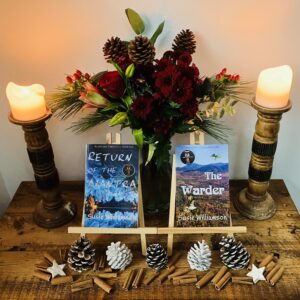


For the Love of Books #35

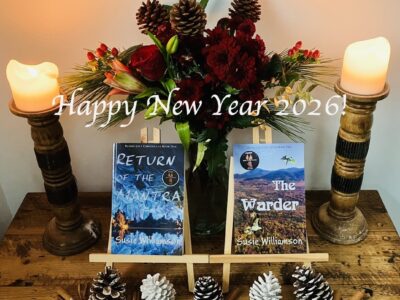
Last week was a busy writing week, working on the third instalment of Blood Gift Chronicles, and tightening the ending. The weekend was a perfect end, sharing poetry at Exeter’s St Nicholas Priory, leaning into the magical. Absorbed in the atmospheric surrounds, I thought of the temple on the island of Evren in my novel, The Warder, where magic stirs in the cavernous walls.

Magic stirs on my bookshelves too, and so I bring you two fabulous reads, with a deeply magical and atmospheric feel.

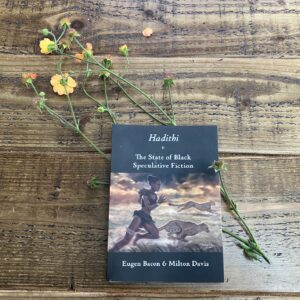
Hadithi & The State of Black Speculative Fiction by Eugen Bacon and Milton Davis

Hadithi begins with a scholarly dialogue about the uniqueness of genre-bending speculative fiction, the diversity of voices contributing from the indigenous and the diaspora, and the powerful blend of own voice narrative.

“Until black speculative fiction is normalised, there’s much work to be done.”

Following this opening, a collection of short stories bring magical tales which speak of ancestry, soul, continuity and discontinuity, all woven through various sub-genres.

Eugen Bacon brings crisp, clear visions of life. Still She Visits is the story of Segomotsi, who is 7,000 miles away from her homeland, Botswana, while her sister, Mokgosi, visits often, arriving like an African daisy: radiant, luminescent and big in bloom. As Segomotsi feels her way through the entanglements of sisterly love, she is left facing the stark truths of grief. In The Water’s Memory, Adaeze and Aloyse share the joy of their marriage, the sadness of Adaeze’s passing, and a funeral of dancing feet celebrating death as they would life. It’s a reminder of the fragility of life, the strength we strive to find for one another, and the understanding of how love can reach into those silences. In Baba Klep, Clyde and Revita crash land into a post-apocalyptic African landscape, each wearing their cleft lip with differing portrayals: for Clyde it displays the inconvenient physical pain; for Revita, it is part of her strength and beauty. On a quest to create a new, sustainable solution for the landscape, Revita’s shrewd intelligence and knowledge brings the landscape to life with the sound of locusts and birds showing the way to water, and a crude irrigation system watering an array of crops: maize, peas, cassava, bananas, beans, sweet potatoes and millet. And the tale, Ancestry, is a short, sharp shock. Aptly exploring the marginalisation of women and girls in patriarchal societies, justice brought like a punch in the gut… from a vampire.

Milton Davis brings colourful, crisp imagery and a thought-provoking lens. In Carnival, Antwon steps out into an inventive futuristic world of holoscreens, dancing tattoos, and rideout aerial traffic transporting him to the ultimate destination of Carnival, for a ‘fleeking’ good time. In Down South, Roscoe, originally from Alabama and now chauffeur to Miss Liza, agrees to journey back down south to find Miss Liza’s lost child. He finds lodgings in a local juke joint, an atmospheric place, the air heavy with a wetland organic aroma, and the sound of raucous laughter against a strumming guitar. But the danger of the times is never far away, making for an edge-of-your-seat read that makes the ending all the more satisfying. And in The Swarm, Famara, a warrior for the elders, journeys into the barren lands of the Sahel, where he sets up his makeshift lab. He soon discovers that the ground isn’t merely sand. The locust apocalypse is underway, but nothing is as it seems.

A truly exciting collection delivered through a refreshing lens. Highly recommended.

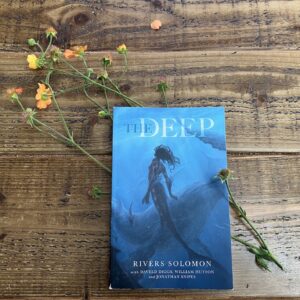
The Deep by Rivers Solomon

The Deep is the story of water dwelling descendants of pregnant African slave women, who were tragically thrown overboard into the ocean. The offspring of these descendants are called Wajinru, and were born breathing water as they did in the womb. Whales were their second mothers, who fed them, bonded with them, and took them to the deepest parts of the ocean where they could be safe. They made their home on the seabed, where the trauma faced by their ancestors is forgotten by everyone except for the historian, keeper of memories.

The main character, Yetu, is the current historian, one of extraordinary sensitivity, forced to dull her own senses to save being overwhelmed by the traumas of history. Only at the Remembrance can she find peace. It is a ceremony where she shares the memories, satisfying the Wajinru’s hunger for knowledge, a sharing that allows her to be free of the past for a time. But when the ceremony is over, memories will be returned to her, since the role of the historian is to carry the memories so others don’t have to. For Yetu it is a great burden, cursed with remembering the painful and wonderful, traumatic and the terrible, a burden so heavy she would hand herself recklessly to the sharks. She hopes that her ancestors will not continue to expect her to endure the burden, but they are needy, and so she leaves, to save herself from dying, since for Yetu, continuing to remember would be suicide.

‘The place of belonging is where loneliness ends.’

While Yetu’s story holds tragedy, it is also heart-warming. Her sensitivities are endearing, contrasted with the courage to venture into the unknown. I found the whole premise of the story to be compelling, and enjoyed the immersion into this watery world, told with a kind of poetic justice, as well as the rationale of biology and ecology explained enough to bring to life the intriguing fantastical. With themes of belonging, identity, and being true to oneself, this is a thought-provoking reflection echoing the brutal tragedy of the Atlantic Slave Trade, as well as being a colourful tale, filled with magic, captured in a watery world.

What are you reading?

For the Love of Books #33

A Halloween special for the love of books, and two titles for a double dose of heebie-jeebies.

The first title was one I was lucky enough to catch a sneak preview of, since I was asked to paint the cover art. With such a vivid tale, built on imagery that leaves a permanent imprint, it was a pleasure to work a visual to embrace the story.

At Night, White Bracken; by Gareth Wood

Deep in a Midlands high rise estate, smoking hash and supping flat Carling, Danny and Cooper are watching a show about hunters, featuring two men baiting and trapping paedophiles in a modern day blood sport. Inspired, Danny and Cooper join forces with Hickey, a particularly sinister and intimidating individual, and begin laying traps for their first victim, enlisting the help of a vulnerable young woman, Shanice. I appreciated the opportunity that Shanice’s character brought, allowing for moments of tenderness to exist in lives astutely observed.

There is a poetic quality to the writing, with prose alive on the page, perfectly describing the crime and grime, the bleak and the monstrous, in a place where men move in packs like rats among bladed edges of high rise blocks, edged by wire fencing. But as this terrifying and misguided plan unfolds, the world gains mysterious depth.

Danny is the narrator, revealing an intriguing personal backstory that sets him apart. Remembering recurring childhood nightmares, he introduces a cosmic quality that blends the possibility of magic with pallid reality. Realities collide, dread and merriment entwine, in a world of malevolent, sinister, magic, and a horror-filled journey cast in bright white light. The characters are real, and kept me guessing, as edgy as the estate. Streaks of almost beauty reveal humanity that is captivating, made more so by the harsh surrounds. And in this vividly depicted and entirely relatable world, the reveal of magic was the perfect tease to lead the way through the dark twists and turns.

A horrifying and brilliantly inventive, thought-provoking tale.

Hex; by Thomas Olde Heuvelt

Hex is a chilling supernatural thriller set in the town of Black Spring in picturesque Hudson Valley, a town cursed by the Black Rock Witch, a seventeenth century woman called Katherine van Wyler accused of witchcraft back in the days of puritanical colonies. Chained, and with eyes and mouth sewn shut, she haunts the streets and enters homes at will. Her presence in daily/nightly life is the norm, which makes it no less chilling, and since the story is told from the perspective of a diverse cast of townspeople, the way in which people relate to her is broad. Some mock and chastise in scenes almost comical, while others are deeply affected, feeling injustices that continue to be committed against her. One resident goes so far as to offer comfort, adjusting chains, speaking compassionately, empathy perhaps born from her own circumstances, while undoubtedly motivated to appease the spirit in order to remain safe from the evil eye. The range of responses is bizarre, and interesting, with one thing in common, no one will open Ms Van Wyler’s eyes.

As residents carve their path for living alongside the curse, a web of ritual and routine is formed, and paranoia and claustrophobia spreads, ratcheting up the horror. I was soon drawn into this creepy page turner, that reveals the truly disturbing dark side of human nature. With relatable characters, dynamic narrative and vivid descriptions that leap off the page, this original story haunts long after the last page is turned.

What are you reading?

For the Love of Books #32

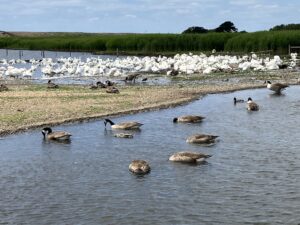
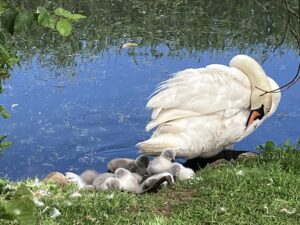
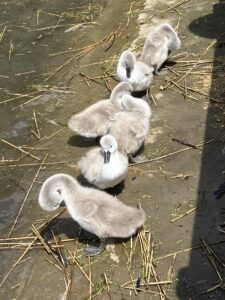
A nod to my last post themed on nature, and a recommendation following a gorgeous day out in Dorset at Abbotsbury Swannery. Tipping a dramatic coastline, this unique and natural wildlife habitat is the only place in the world where you are able to walk through the heart of a managed colony of free-flying, nesting Mute Swans. And what a place to live – it’s no wonder they choose to stay.


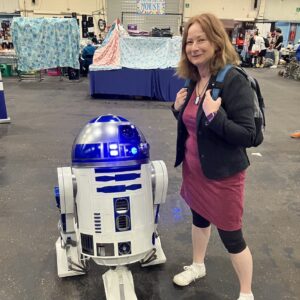
And after a big breath of avian sea air, it’s back to the realm of stories with Comic Con. Star Wars is clearly a favourite, and the full size array of robots through the franchise. They may be made of metal, but they are far from expressionless.

The emergence of AI and its interplay in the art world is a big topic. From droids, space travelling humanoids, alien terminators, and colonising machines set to take over the world, robotics and AI have long featured in our stories. Recently I was introduced to a fascinating series, with a whole new take on this vast subject:

The Subjugate; by Amanda Bridgeman

In a watchful world where humanity is complemented by AI, cities are ruled by security companies, yet crime and murder are still commonplace. The story features two detectives, Salvi Brentt and Mitch Grenville, each one an interesting character in their own right, with intriguing complex backstories and a dynamic that at times complimented the dis-ease of the thriller, which I found compelling.

The setting of the story is well-drawn, an imagined future where ethical limitations of AI are subtly observed, with talking robo-cleaners and dedicated AI prefilling data of transcriptions and interviews, yet always with a human hand to sign them off to ensure their eligibility in court. Yet some pullaway communities are resisting technological advances. Just outside the city, the unincorporated community of Bountiful is one of the leading pullaway communities, and one of the most religious. Founded in 1934, it is a town built on religion, populated by the Children of Christ. There’s no internet, mobile phones or computers, although it does have a close relationship with the nearby Solme Complex. The Solme Complex houses violent criminals called Subjugates, who undergo extreme treatments involving religion and technology, and include painful chemical castrations and implanted neural technology which can be used to shock into submission. There are interesting themes around redemption, forgiveness and freedom from sin, with aptly disturbing methods. Subjugates who are successfully converted over the course of several years of ‘treatment’ are called Serenes. They are released unsupervised but with the neural implants recording electrical activity in the brain. When heightened emotion is detected, it triggers a visual alarm in the silver crown worn by Serenes, called a halo.

Following the discovery of a young woman’s body in the community of Bountiful, the two detectives head out to investigate. A discovery of biolume at the scene, bacterial natural lighting, leads them to the Solme Complex, with Subjugates the prime suspects. As the investigation continues, further layers of the world are revealed, with the relevant question of ‘how far is too far’ with technology explored through inventive examples, including augmented realities where avatars are free to play out forbidden desires. There are questions around, just because you can, should you, and are we all slaves to something whether it be religion, technology, or law enforcement? And there are themes around how this all connects to freedom and control. In a bid to be free, do we just end up creating further structures, disciplines and controls? Is freedom truly possible in a world of corruption? I enjoyed the exploration of these big questions, the intriguing future dystopian world, and contrasting characters leading this fast-paced sci-fi thriller that kept me wanting to know more.

The Sensation; by Amanda Bridgeman

Salvi Brentt had killed a man, and he had almost killed her. Under psych review she was cleared for active duty and has a new partner, the department’s dedicated AI, Riverton. A case opens when the body of 34-year-old Devon Barker is found in Sensation. A woman, Myki Natashi, is discovered unconscious in the bedroom by police, who had responded to a domestic disturbance. Myki doesn’t know what happened, and only remembers dinner the night before with Devon. Vincent Calabri was seen in the area, a man with a small rap sheet in the employ of detective Francis Melon, who is Myki’s ex-boyfriend of 3 years. Melon works in the financial industry, a known acquaintance of John Dorant, affording him loose ties to organised crime, and friends in high places. This case is also coupled with the murder of undercover officer, Caine, and the disappearance of the Chief’s daughter into a drug gang.

As in the first book of the series, I enjoyed the character arcs, and in particular the main character, Salvi, a complex woman with a past, and strength to face herself and get the job done. She is still seeing her old partner, Mitch, which was an interesting aspect of her character development in the first book, and continues to add interest in this sequel. Previously, Salvi had faced two serial killers, and one was still alive: Edward Moses, Subjugate-52, locked up in the Solme Complex. Subjugate-52 has been asking for Salvi. He hasn’t received what was promised him after helping Salvi in the last case. He was promised to become a Serene, but Salvi disappeared on him, renegading on her word. Now she is concerned what level of deception he is capable of, and how he might manipulate access to the wider world.

The development of the role of AI in this sequel was particularly interesting. Talking robo-cleaners have names, and the AI, Riverton, is humanised through friendly interactions, showing apparent consideration to which Salvi responds in kind. Hackers cause chaos to evidence by wiping CCTV footage, and more sinister, they hack neural implants that leave a brain wide open to abuse and full-on takeover. A broad range of available technology sees a further reduction in human/human interaction, with drone surveillance, VR headsets and tasers, robot dancers, and holographic forms. Neural tech is also injected in drug form, rendering a person entirely helpless to being used as a sex droid. There are interesting questions here, since the drug lowers a person’s inhibitions and heightens sexual desire, leading to sex. But this is under the influence of a drug, illegally administered without consent, and therefore constitutes rape.

Tech used to keep subjugates in line can equally be used to keep slaves in line, adding a further, compelling sinister edge. Salvi is on a deadly mission to uncover truths, and among the truths are: where do we draw the line, who is good and who is bad or is society just lurking somewhere between, what is right and wrong and who has the right, who is hunter and who is prey? Technology affords power, and with it comes responsibility, but is anyone responsible enough? These are questions I am left with, making this an inspiring read.

What are you reading?

For the Love of Books #31

It continues to be a turbulent start to spring. In this moment, the birds are singing and a black cat sits poised on a tin garage roof, shaded by a flowering dogwood tree, but the moment is unlikely to last. With mixed forecasts always on the horizon, unpredictable is the word of the day. The idea of shifting sands, searching for reliable ground only to discover we have no control, the knowledge that we are specks in a vast universe, while the universe exists inside of us, the internal and the existential co-existing… themes at home in a good ghost story, or two. And to that end, I bring two recommendations…

Threading the Labyrinth, by Tiffani Angus

Toni, an American arts dealer and owner of a failing gallery, is unexpectedly called to Hertfordshire after inheriting a Manor House. Leaving the New Mexico desert behind, she discovers her inheritance is a crumbling building and overgrown garden, and aptly names it the remains. The gardens change in twilight, revealing ghosts of the past. Toni soon becomes immersed in the history of the place, drawn in by an unexpected hand and her own curiosity. And so begins Threading the Labyrinth, which really is the perfect title.

The writing offers an immersive experience, as the richness of the gardens are vividly described from the perspectives of past and present. At times, reading the story felt akin to walking through an actual garden, where your thoughts drift and your eye wanders, drawn into the depth and detail of mature foliage, and the feeling that work is never done in a living space. For a while I felt I was losing the thread of the story, since more time is given to the voice of the past than to the present, and struggled with my expectations of Toni being the main character. Until I realised that, for me at least, the main character was in fact the garden itself, brought to life by everyone who has been a part of it. I suspect my experience as a reader was not dissimilar to that of Toni’s experience:

‘It’s in the shadows that you find the shape of things.’

Once I let go of my expectations and accepted the coexistence of past and present, I greatly enjoyed this atmospheric, haunting and layered read.

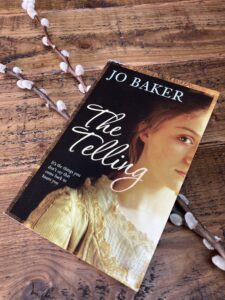
The Telling, by Jo Baker

Rachel arrives at Storrs Hall, her late mother’s isolated country cottage. While packing up the house, painful memories of loss and grief are exposed, as well as the unsettling feeling of a presence in the house. Generations earlier, a young housemaid, Lizzy, called the same dwelling home. So begins the intertwining tale of two women, both struggling against conforming to duty.

 Written with a thin veil between life and death, the past and the present, the narrative is subtle, and begins with Rachel’s haunting experiences that are all too relatable. Those moments that are hard to define, that make us wonder whether they did in fact happen at all: a blur in the corner of your eye, strange humming that could surely just be faulty wiring; unease that has Rachel questioning her lucidity as it draws on her own complex emotions about grief, partnership and motherhood. But with the help of a neighbour, a previous owner and a local historian, Rachel pieces together the house that was a labourer’s cottage, part of the Storrs estate.

Lizzy’s story opens up as a parallel narrative, that reads like historical fiction, delving deep into the experiences of a young working-class woman growing up in the mid-1800s. She works in the house of Reverend and Mrs Wolfenden, who ask about Lizzy’s family lodger, Mr Moore. They request Lizzy spy on her lodger and report back to them. Mr Moore is an intriguing character, with an identity as an agitator and a democrat, against a backdrop of a roomful of books from Shakespeare to Robinson Crusoe. The relationship that forms between Lizzy and Mr Moore is complex, highlighting the vulnerability of Lizzy’s adolescence in relation to an older man, and depicting the intersectionality of gender and class oppression. She is a woman with few choices, torn between a relationship of clumsy beginnings with an older man, versus the man she is supposed to marry. The story also highlights the impacts of the Chartist Movement of the time, which added interest to the narrative.

With well-drawn characterisation, centred around an intriguing property, this made for an interesting blend of history amidst an unsettling haunting.

What are you reading?

For the Love of Books #30

Approaching the end of February and taking a break from the UK rain, with a feast of worldbuilding in two epic fantasy recommendations… Enjoy.

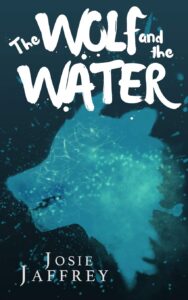
The Wolf and the Water; by Josie Jaffrey

Big things come in small packages: an apt phrase for this modest-sized book that contains a world of extraordinary depth.

If you like detailed worlds, family sagas, crime, intrigue, and a protagonist to champion, then this is for you. I was rooting for the protagonist from the start, a young woman called Kala, considered doubly sullied by the powers that be: once for her father’s foreign birth, once by her disease that left her crippled. She is heir to the tribe of Glauks, in the city of Kepos, a walled city that borders the sea. Unknown to Kala there is a second, secret sea, and a forbidden pool where she goes to swim and feel free from the pains in her body.

When her father unexpectedly dies, everything changes. Kala’s mother must remarry, and proceedings are put in motion for marriage to a man, Nikos; a dangerous man not to be trusted. Left trying to find a place for herself in a newly ordered world, Kala looks for allies she can trust: Melissa, a girl brought to her as a companion, someone she grew up with and is close to; and Leon, Nikos’ son. Characterisation includes a complex love triangle further demonstrating Kala’s uniqueness and individuality.

Kala suspects poison was the weapon used to kill her father, and she vows to do whatever she must to determine the truth. It is a plight which takes her deep into the heart of this dangerous world built on complex tribal politics, headed by the Archon and a priesthood of hierophants. Forced to question her own foundations, there is self-discovery and family revelations, and a journey through this world and beyond, to ‘the edge of shadows’, the wall, warded by Acolytes to keep the dead where they belong.

“I think if I could just push my fingertips through the centre of my chest, I could pull my rib cage open like wings and let it all fly out of me.”

The narrative is as sharp as cut glass, appropriate for a story that demands attention. Based on a world inspired by Plato’s account of the island of Atlantis, prepare for a complex society, with dynamics and entanglements of a broad cast. This is the story of Kala, and her fight for the truth: who killed her father and why?

The Unspoken Name; by A.K. Larkwood

The Shrine of the Unspoken One is cut into the mountainside, looking out over the House of Silence nestled into the valley. There, fourteen-year-old Csorwe is raised to be the chosen bride, an innocent vessel through which the voice of the God can speak.

I loved the opening to this epic fantasy, which reminded me of Le Guin’s Tombs of Atuan, with its edgy, sinister world holding a girl hostage to a tragic fate. In The Unspoken Name, the story explores the spiritual and cultural depth controlling Csorwe’s life in the House of Silence, as she awaits a tragic fate: the day she will sacrifice herself at the Unspoken One’s shrine. But a month before that day, a stranger arrives seeking counsel for his quest: where is the Reliquary of Pentravesse?

According to the library of the House of Silence, it is an inadvisable quest, with all manner of ill consequences following in its wake. But the wizard Belthandros Sethennai finds the idea irresistible and prepares to head out. Although he will not go alone. On the day of Csorwe’s sacrifice, he waits in the shadows, tempting her to leave with him, and live. As he says, “The secret of greatness, is to know when you should risk the wrath of God.”  

So begins an unlikely adventure of a runaway and her new master, through inventive worlds delivered with magical description that brings to life an imaginative feast of worldbuilding, with vibrancy and colour supported by a wonderfully diverse cast. Csorwe is at the heart, on a journey of survival and self-discovery, adapting to her changing circumstances, transforming into a heroine of the free world.

What are you reading?


For the Love of Books #29

With cool blue skies and frost on the horizon, I’m warming up with a deep dive into SFF collections; short stories that spin the unexpected, pack a punch and make you think, all while flexing the bounds of imagination. I bring you two titles by two extraordinarily inspiring authors…

Danged Black Thing; by Eugen Bacon

Eugen Bacon is an exceptional writer and I was honoured to receive a review copy of Danged Black Thing ahead of its much-anticipated release. Traversing the west and Africa, this unique collection of shorts is both dreamlike and lyrical, while delivered with the sharpness of cut glass. It is speculative and mythical inexplicably wrapped in the mundane.

It begins with Simbiyu, amid the colours of forest laced with the sweet scent of crushed guavas and the intermittent whiff of soured yams. Childhood against a rural backdrop brought alive on the page is told in textured layers of family amid the brusque contrast of loss. A boy longing for the comfort of his once pillow-soft mother, forges his way in the world, winning a scholarship that will take him to Australia. But roots cannot be shaken, and while the heady colours of home are a welcome memory, shadows of the past tighten their embrace. When the story came to an end, I found myself wanting to stay, to know more of the character that had revealed worlds in just a few pages.

This is a remarkable collection of voices exploring migration, gender and class, patriarchy and womanhood; a collection that pushes the boundaries of creativity and science, delving into family, love and loss across time and space, speaking to the future with detailed imaginings of a landscape filled with warnings to heed, and questions about what it means to be human. And that is just the first two stories.

There are tales of revenge, aliens and fantastical beasts, explorations touching each phase of life, drawing on the power of ancestors, tradition, and vivid descriptions of both modern and fantastical worlds. The prose is soaked in truth, empathy and invention, transporting you deep into physical place and breathless mental imaginings. Each word leaves you hanging in this collection that feels like a colourful celebration of life, complete with flaws, scars, magic and beauty.

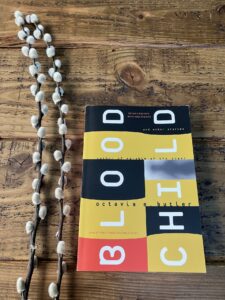
Bloodchild; by Octavia Butler

Bloodchild is an innovative collection of shorts, inventive parables to the contemporary world, small in size and huge in reach. In true Octavia Butler style, the protagonists are strong and complex, and the themes astute and challenging to the status quo. The collection begins with Bloodchild, the story of a colony of humans in an extrasolar world, forced to make startling accommodations with their hosts. A perfectly weird, unsettling and memorable story that asks the question, what would you be prepared to accommodate to pay the rent?

Another story, The Evening and the Morning and the Night, explores life with a disease that causes the sufferer to feel trapped and imprisoned within their own flesh. In a world with woefully inadequate institutions and devastating consequences, the question is raised: what can we do, what can we become, what are we in relation to undeniable genetics?

Rooted in the mundane, shining a light on the bleak, brought to life with inventive experimentation, the stories transcend through alien invasions that give a whole new meaning to community, moments of tenderness shining in an apocalypse, to the big question – what would you do if you met God? Plus two essays which give great insight into the author’s journey as a writer, and her resulting advice to those of us following in her footsteps. A thought-provoking read. Highly recommend.

What are you reading?


Representation and Belonging in SFF

It’s been a busy couple of weeks, firstly taking part in this year’s World Fantasy Convention all the way to Kansas from the comfort of my writing room, because there’s no place like home.

With fabulous authors from all over the globe, reading and speaking on a great range of panels, there’s much to inspire, to share and collaborate. For my part it was a pleasure to sit in on the Magical Healing and Disability Aids in Fantasy panel, discussing representation of disability in the genres, and exploring the added creative options that magic and the fantastical can bring. Thankfully representation of diverse abilities is improving. A recent cinema trip introduced me to the character, Joshua in the film, The Creator, a wonderfully layered character, a double amputee with seriously fancy prosthetics in this world of AI. Still, his disability is kept visible, representation organically woven into the character arc of a hero.

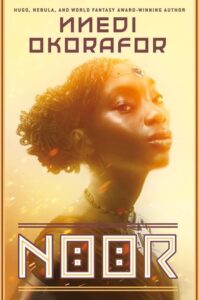
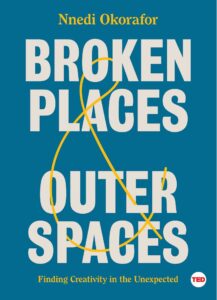
It got me thinking about the book, Noor, by Nnedi Okorafor. Noor is the main character, a young woman born with significant disabilities, further disabled in a car crash as a teen. The story is her journey into cybernetics, rebuilding herself in unique ways, focused on the aim of wanting to move through the world on her own terms. And it’s a wonderful read, as is Broken Places and Outer Places, Nnedi Okorafor’s auto-biographical novella.

Empowered characters pushing back against the ableist view that disability needs to be fixed or cured in order to live a fulfilling life. Professor Xavier didn’t need a cure, and neither did Bran Stark on his journey from childhood underdog to all-powerful three-eyed raven. Just a few more recommendations to add to the conversation:

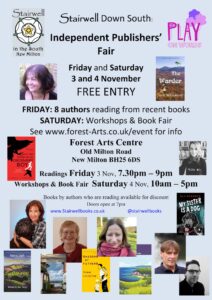
And last weekend, from Kansas to the New Forest here in the UK, where I joined my lovely publishers for the Play on Words Festival at the wonderfully colourful Forest Arts Centre.

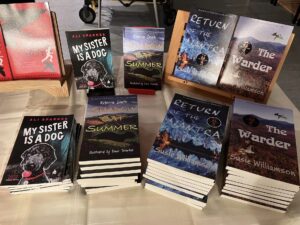
Friday was a gorgeous evening of readings, and among other wonderful authors I was delighted to read from The Warder, a world of gifts and curses, animism and magic, where characters are inextricably bonded, against a backdrop of mysterious dragon mythology. Saturday saw a day of inventive workshops, including one on the subject of young adult fiction, facilitated by myself and Victoria L. Humphreys, author of Not the Work of An Ordinary Boy. What content is too mature for teens? What ways can we approach tough content in books that are inclusive to the younger reader? There’s not much you can’t tackle, it just depends on approach, and, done right, what a wonderful resource books can be, creating space to process difficult stuff, share stories, harbour that all-important sense of belonging. And there’s just so many great YA books out there, too many to name, but here are a few favourites:


In the midst of a storm, I was lucky to catch a blue sky and have a moment to contemplate the power of stories, to reflect, give space, inspire, and offer that sense of belonging.

What are you reading?

For the Love of Books #27

Stopping by to share a love of books, and this time a look at fantastical creatures. There are so many great titles to choose from, but I’ve gone for three, each with a unique flavour…

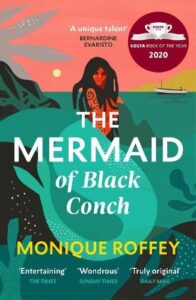
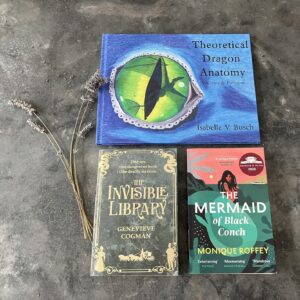
The Mermaid of Black Conch; by Monique Roffey

In the Black Conch waters, one mile off Murder Bay, David Baptiste meets Aycayia:

“…long, long ago I don’t know the time, only that they called up a huracan, to take me far away, seal up my legs inside a tail.’

And from that day, whenever the leatherbacks arrive, he knows she will soon appear. No woman can compare to his mermaid, leaving a heart of sorrow to drown in a bottle of rum, while he finds the words to write the story down. She was an interruption in the middle of God’s act of creation, cursed by women to seal her sex inside a big tail, to keep her away from their men. And when the Americans caught her, David Baptiste is left feeling the sorrow of believing it was his fault.

Set on an imaginary Caribbean island, this is a wonderfully textured, layered read that pulls on all the senses. Tantalising in its entanglement of the mythical blended with visceral realism of everyday life. The place was brought to life, the love between man and mermaid felt as real a blackbird’s song, and the story arc weaving between past and present brought reflections of life’s loves, losses and desires into sharp focus. A lively, colourful, triumphant treat of a book. Needless to say, I adored it.

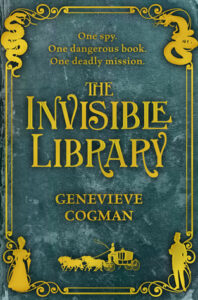
The Invisible Library; by Genevieve Cogman

The Invisible Library is a fun read, that overall has the feel of game playing within the realms of story-telling, with rules and payoffs to magic along the ride. The story stars Irene, a professional spy for the mysterious library, harvesting fiction from different realities. She is a character who is sure of herself, content and confident in her chosen profession, courageous in her various assignments to alternate worlds. The latest assignment is to an alternative London to retrieve a dangerous book, along with her assistant, Kai. But nothing is as it seems in chaotic alternate worlds.

I enjoyed the characterisation, and representation of an older woman unflinching in adventure, and courageous in the face of, well, anything. It was also a refreshing dynamic to see her play an older role model to the young man Kai. Fae creatures of chaos and magic await, an infestation of vampires, werewolves and technology working in weird ways, and Irene is soon on the run from gargoyles and hellhounds, only to stumble upon steampunk creatures to delight the imagination of any reader – creatures that also extend to the idea of the monster inside us. But what exactly is the sinister character laying in wait…?

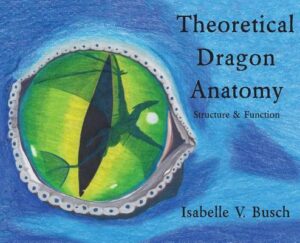
Theoretical Dragon Anatomy; by Isabelle V. Busch

Is it true that dragons wholly belong in the mythical beast category, are they truly fictional, or are they formed from fragmented fact? Theoretical Dragon Anatomy is a biology manual, innovative in ecological thinking, problem solving, theorising, and containing intriguing and beautiful artwork to further illustrate the hugely absorbing information. With scutes and sensory pores shared with swimming alligators, wing structure akin to their pterosaur ancestors, a cardiovascular system resembling that of a bird, not to mention a digestive system with crops akin to their avian friends, and embryology that draws lines to lizards, snakes, chickens, crocodiles and bats… I can honestly say that dragons have never felt so familiar, a fact I have thoroughly enjoyed discovering. Oh, and did someone mention a flamme gland… yes, all wrapped up with some dragon pyrotechnics…

What are you reading?

For the Love of Books #26

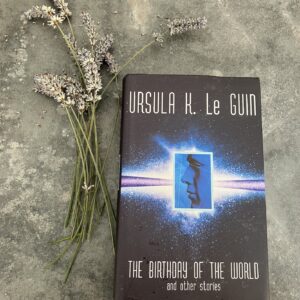
If ever I needed a reminder of the heights of great worldbuilding, this collection, from one of our great SFF pioneers, Ursula Le Guin, offers a masterclass. Eight short stories and novellas bring us worlds near and far, those travelling between worlds, and shifting perspectives from outwards to inwards with thought-provoking poignancy.

The Birthday of the World; by Ursula Le Guin

To give you a sneak peek into the inner workings…

The Birthday of the World

The Birthday of the World is considered to be the time the sun stands over Mount Kanaghadwa, when people count themselves a year older, although the rituals and ceremonies are no longer remembered. In a society struggling with their concept of god, the narrator reflects on their own beliefs, rituals and ceremonies, layering a world where gods dance and die, and wild dragons fly. But with wars at the borders, lands have grown too large and the existence of God itself is threatened. The world must die so that God may live, and so the narrator is left pondering the identity of God itself.

Old Music and the Slave Women

Esdan, a chief intelligence officer, ends up on a clandestine mission during a civil war. Intercepted by government forces, he is imprisoned on a large slave estate, where his perspective becomes increasingly limited. In a brutal world, this is a story of survival, and hopeful endeavour in the coming revolution. Will the rebellion reach them? From humiliating violence, to muddy waters of human inequity in supposed liberation, to the failings of world construct to deliver utopia, it is in the bonds between slaves that kindness and comfort is found, and where the heart of the story lies.

Paradise Lost

On a multi-generational voyage to a potentially habitable planet, Liu Hsing and Nova Luis are members of the fifth generation born on the space ship. Many are excited by the idea of discovery, a planet to explore and send information back to the human species. But some people, especially the older generation, subscribe to the religion of Bliss – the state of a blissful journey, with no end. For them, Bliss is the only reason to stay alive. Liu and Nova are faced with followers of the religious cult who question if living on a planet is such a joy. There are also environmental themes, highlighting the challenge of making change, and the overall question of what is natural and what is not. An interesting read, fascinating in its construct, and thought-provoking in the themes of isolation, religion and utopia.

Solitude

Solitude is told by the narrator, as she reflects on her experiences growing up on Eleven-Soro. Her mother was an Observer, whose work involved settling among the native people of Eleven Soro, to learn about this complex alien world. Cultural differences between mother and daughter eventually drive them apart. Where the mother shuns the alien culture, the narrator adopts it as her own, wanting to grow her soul and experience what it means to be  a person of that culture. It is a theme reflective of generational confusion, complicated by outside influence. It is also an interesting use of perspective, approaching the culture of Eleven-Soro from a colonised mindset, yet entirely shifting perspective onto a young woman who becomes part of it. Cultural norms are highlighted, which require societies of modest population, driven by a desire for solitude and the social norm being introverts, perhaps essentially selecting for autism. In true style of Ursula Le Guin, subverted expectations are delivered with ease, which illuminate and surprise, in this creative and thought-provoking world.

The Matter of Seggri

Set in the dystopian society of Seggri, the story is written as a first contact report on the ship’s log of the Wandership. The captain describes a complex society which demonstrates gender as a social construct. Gender expectation is subverted and replaced with inventive roles. The impact of colonialism is also questioned, with consideration given to a society destabilised by outside contact. Previous colonial interference messed with chromosomes, which now results in there being sixteen women for every one man. In the present day, men have all the privilege and women have all the power. Given the opportunity, would men cling to their privileged status or demand freedom, and would women resist giving up their power? Would the sexual system break down?

Unchosen Love

In a world textured with colour, legend and mystery, a polygamous society is structured around family units called sedoretu. Hadri has been chosen to join one such family, after a man seeks out his affections. Homosexual and heterosexual coupling is commonplace, and various aspects of relationships are explored, including the more insidious coercive control.

‘Being unhappy in a room is worse than being unhappy outdoors.’

It is following one mysterious encounter that Hadri comes to realise his true feelings. It is a startling discovery, not least for himself, and brings with it a tantalising coming-of-age feel.

Mountain Ways

This story continues with the themes from Unchosen Love, with society structured around the same sedoretu units. Two women fall in love outside of convention, but over time they conform and strive to form a sedoretu. Through it we see the cost of compromise, the bitterness of conformity and restriction, a stark contrast to two previously independent souls. It was an intriguing and illuminating play on character, that also undoubtedly left a bitter taste. There was also an interesting interplay with the natural world, challenging the concept of ownership. I particularly enjoyed the portrayal of environmental equity.

Coming of Age in Karhide

Set on the fictional planet of Gethen, a place where adults have no fixed gender identity, the story follows Sov Thade Tage em Ereb, a teenager living in a large communal home in the Karhidish city of Rer. As Sov experiences biological changes, it is clear they are ready for kemmer, held in a communal Kemmerhouse for those sexually receptive. Any children conceived in the Kemmerhouse are raised in the communal home, the hearth. Sov and their friend, both ready for kemmer, express fears that being in kemmer is dehumanizing, being seen as a sex machine. And so Sov’s coming of age story is told, of changing bodies and sexuality that was utterly relatable, as well as a meaningful alternative look into gender identity in a place where, quite simply, love is love.

What are you reading?