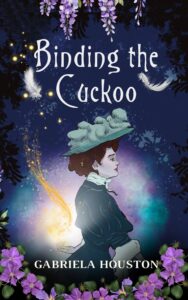
This month I am delighted to bring to you a feature post, celebrating the recent release of Binding the Cuckoo by renowned fantasy author, Gabriela Houston.
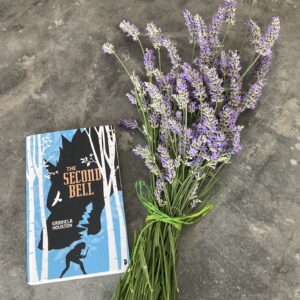
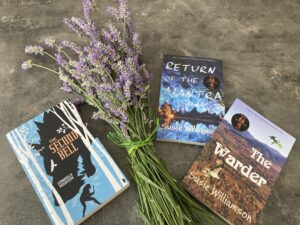
I first came across Gabriela’s work when I read The Second Bell, a fantasy book that quickly became one of my all time favourite reads. I adored the characterisation, and the intimate portrayal of communities steeped in Slavic inspired folklore. More on my review of The Second Bell can be found here.
Now I am delighted to be joining in celebrating the author’s latest release:
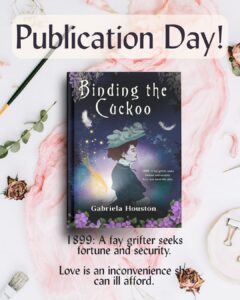
ABOUT THE BOOK:
In the late 19th century, a scientific marvel allows scientists to open rifts into the realms of myth. Powerful creatures, weakened and stripped of their memories, are brought to serve the whims of the wealthy elite…
In 1899 New York, Hare, a young woman with a mythical secret, finds herself trapped into servitude to the wealthy elite. When an equally desperate schoolmistress, Miss Anne Bonningham offers Hare a chance at freedom, they embark on a daring plan. Disguised as ‘Miss Edwina Walker,’ Hare navigates the treacherous waters of London high society, solely focused on securing a marriage and escaping her past.
However, amidst the glittering balls and intricate social games, Hare finds herself drawn to Ernest, a charming solicitor torn between duty to his friend and his undeniable attraction to her. As hidden agendas surface and a vengeful figure from her past threatens to expose her true identity, Hare must make a choice: embrace a life of comfort and security or choose freedom and a love that could shatter the very foundation of her world.
Binding the Cuckoo is a story of love, deception, and the fight for self-determination in a world where appearances can be deceiving, and the line between freedom and captivity is blurred.
MY REVIEW:
Binding the Cuckoo is a historical romantasy, evocative and enchanting, led by the mysterious Hare, a young woman and mythic, who is set to explore the treacherous world of London’s High Society, while attempting to outrun her past.
Hare’s journey begins in New York, where she is trapped in servitude. She carries a mythical secret, being one of the powerful creatures brought to serve the whims of the wealthy elite. The opening scene unfolds with ease, offering an instant connection to an endearing protagonist who I was rooting for from the start. Hare possesses powerful gifts, yet is powerless by circumstance, holding no sway over the direction of her own future, prey to being summonsed at the whim of wealthy humans who look down on her kind.
Hare’s character demonstrates the experiences of othering, of being othered, held in servitude, having no autonomy or self-determination, and being of no value to those who would claim her for their own purpose and comfort. She can find herself ripped from her own reality at any moment, showing the face of humans to be monstrous and the need for Hare to be on guard and vigilant. As a servant of a wealthy household, we see her standing on the periphery, central to proceedings yet rendered invisible. Her vulnerability is stark, and her empathy for others, endearing. Freedom would be a dream, and yet when it unexpectedly comes to Hare, it is terrifying, since she is now trapped in the world of humans with no way back to the world she knows.
Anne Bonningham is the woman who freed Hare, and now their fates are tied. They travel to London, to the home of Baroness Winchfield, Miss Bonningham’s former student. Hare is introduced as Edwina Walker, Anne’s niece, and thus starts her new life. In many ways Hare is free, but she doesn’t feel free; in high society London only money and position can give true freedom, and both Hare and Anne Bonningham consider ways to achieve this, by Hare securing a good marriage.
In high society London, Hare must keep her mythic status secret. Fearing that the Baroness might discover her true identity as a summonsed pet, Hare must say little, voice no opinion, not show her intelligence. Not only does this narrative reveal the vulnerability of Hare’s existence, but also of the Baroness’s. If the Baroness were to discover Hare’s intelligence, it would shake her very foundations, since she believes that summonsed pets are mindless creatures. Hare’s life as a mythic in hiding, exposes the powerful day-to-day discriminations, themes of identity and social prejudices, messaging that reflects real world issues.
Unaware of Hare’s true identity, the Baroness decides that Hare is fine enough to introduce to court. And so begins the twists and turns of courtship, duty, survival and love.
The backdrop world is alive, lavishly textured with sumptuous attention to detail, with rich furnishings and brightly lit parlours, edged by shades of opium and gin. Among the striped trousers and fine gowns, narrative is well paced, in a story that seamlessly weaves the mundane with the fantastical with hobgoblins as butlers being a natural occurrence. The peppering of magic is delightful and intriguing, and builds into depth of narrative around themes of discrimination and othering. To add to the illusion of her fashionable existence, Anne Bonningham travels with an Eastern European cat shaped spirit, a domovoy, a character that further highlights an unjust world since this spirit is cheaper and deemed less sophisticated than its Western counterpart. In light of being a companion of Anne’s, Hare is left considering her own identity and whether she is a traitor, yet Hare and the cat spirit make for an unlikely alliance. After reflecting on how powerful the spirit is, like herself, and how nothing is truly yours if someone else could just take it away, Hare finds a way to release the domovoy. Whether it will go might be a different matter.
The narrative flows with ease, drawing you into a deep dive of decadence and shade, and into the hearts and minds of those who dwell there. Hare is settling into the highlife, muting obvious magical traits in her appearance so as to blend in and not draw attention, while watching the serving folk and empathising with their invisibility. And all the while maintaining a degree of invisibility for herself. As encounters become more familiar, Hare finds herself between two men both wanting of her affections. I enjoyed her internal narrative, exploring her mental landscape, the empathy she holds for others, while working to secure her own safety in a world in which she holds no power. It is a familiar story of survival, the duality of oppressor and oppressed, and the measures people will take to survive, and seek a way to thrive. And it begs the question what would equality look like, and what would it take to achieve that.
Romance is building in awkward meetings, told through shifting perspectives between two unlikely and potential lovers. Flirtatious encounters and confusing jealousy make for a believable dynamic that keeps you guessing, not least because the stakes are high, made more so by a threat to expose Hare’s true identity. The representation of love, and the thought-provoking questions it raises is an interesting look at authenticity, and the value of love in the face of inauthenticity.
Hare plays the part well, though never feels as though she fits. It is an inner narrative that makes for strong themes of identity, and delivers a protagonist to champion. In turn, the supporting characters are well-rounded, compelling, and with diverse perspectives to illuminate this unfolding world, and the complex relationships within it. Set in a vivid world, the narrative flows throughs the highs and lows, tensions and drama among unexpected loyalties and betrayals. It is a magical tale of uncertainty, of walking on shifting ground, of daring to hope for safety, and maybe, just maybe, finding more.
A vivid and magical tale beautifully told.
ABOUT THE AUTHOR:
Gabriela was born and raised in Poland, brought up on a diet of mythologies and fairy tales, spending her summers exploring the woods, foraging, and animal tracking with her family. Gabriela’s two adult fantasy novels, The Second Bell & The Bone Roots were published by Angry Robot, and she has also pubished a MG duology with UCLAN. In 2024, along with 19 other authors, she crowdfunded the anthology of reimagined folktales, which she has edited and illustrated. Gabriela is the host of a YouTube channel, The Gabriela Houston Project: Storytelling in All Its Forms. She lives in London with her husband and two children.