Tag: Climate Fiction

The Magic of Writing

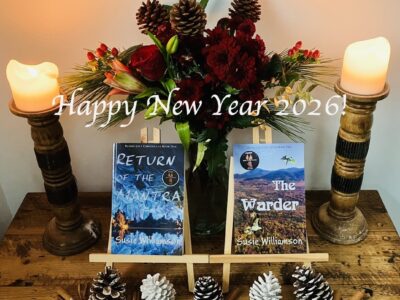
I am caught in the magic of creating, and the wheels are turning. Among the day-to-day, and the necessary considerations of balance, projects are moving forward, points of fruition are on the horizon, and I am enraptured by the process. One such project is the third instalment of my fantasy project Blood Gift Chronicles, COMING SOON. I took the necessary time, allowed the ideas to percolate, the characters to mature, and now the end is in sight. I am excited. And I am excited to reveal more surprises that I’ve been working on for the series. Soon.
Working in fantasy, magic is a running theme. Where some consider magic to be associated with powers that do not occur in the natural world, in my work I look for the magic to feel like extensions of the natural world. It maintains an organic feel, drawing on ethereal spaces, dreams and the spirit world, and the power of words. It is also a world I created, and so the rules of what I consider to be natural are something I can play with: the magic can be big, and explosive, shape-shifting and extraordinary, while not losing touch with the quiet natural order that the characters are steadfastly working to return to. Because nature itself is magic, a place from which to be inspired, and a place to return to.

There is magic that is passed down in bloodlines, magic that is performed as ritual, both in groups and individually, magic used to change form, to communicate, to forge connection through the ages. There is magic that is enabled through powerful amulets, and magic that is driven through belief and emotion. I think fondly of the character Suni in Return of the Mantra, facing tragedy, being cast out alone into a dangerous world, feeling the weight of responsibility as she must feel her way against the odds, to survive, and to realise and accept that she is gifted. She is a dreamwalker, a gift that remains and establishes itself through the series, fostering connection with those she loves and in particular with a young friend who she watches over.

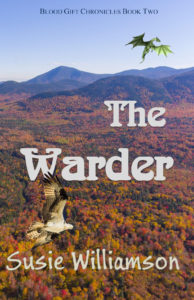
To better explain, I’ll hand you over to Suni. The following is an extract from The Warder, when we first meet Suni again, ten years later from when we left her at the end of Return of the Mantra. Enjoy…
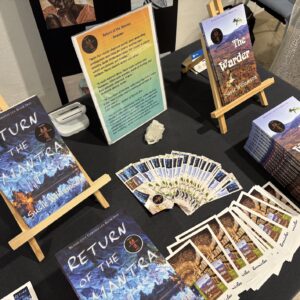
THE WARDER

Chapter Ten – EXTRACT

MY MOTHER HAD BEEN A dreamwalker, a gift passed from mother to daughter. We were separated for years before she died, but she had always been able to reach me in my dreams. It was only after she died, ten years ago, that I realised the gift had found its way to me.

I see the mists of Serafay at the edge of my dreams, mists only the dead or a dreamwalker can know. How to navigate the mists is still a mystery even to me; it just is. Sometimes I think the destination lies rooted in desire. My mother had missed me, worried for me, a longing that had led her to me. My own nightly ventures took me to the dreams of my young friend, Wanda; a gifted boy I had known since he was an infant. Ours was a bond formed during an extraordinary journey we had once shared.

Much had changed since then, and the distance between us meant I couldn’t visit often. A boy gifted to speak the tongues of animals, he lived among wildlife in the valley beyond the mountains, while I had returned to my coastal hometown. I thought of him often, worried about him. I was aware that his relationship with Ntombi, my old friend, was not as it should be. I was thankful for my gift, reassured by my visits into his dreams.

ONE NIGHT I CLOSED MY eyes and drifted from the waking world, descending into sleep. Random colours and images of everyday life came and went, but I drifted on through until the colours drained to grey, and I was standing before the wall of mist. I stepped in, abandoning caution, and surrendered to my gift.

In the thick grey haze, the air was still and cool. I walked blind, deeper into the mist where ghosts crossed my path. They appeared oblivious to me, sometimes walking straight through me, leaving the cold of their presence lingering on my skin. Whilst my mother was at peace, ghosts aimlessly wandering Serafay had mournful, despairing eyes.

I felt a change in the air; a slight breeze brushed against my hand. I held out my hands, finding the direction, and turned to walk into the breeze. It was always the same, the mist showing me the way. The breeze grew stronger the further I went into the tunnel of moving air that was hidden from the dead. Among the swirling tones of grey, a window of colour appeared up ahead. I walked towards it, unsure of where it would lead. The only certainty was the dreamer; it was always Wanda I came to when I walked out of Serafay.

I stepped out of Serafay to find myself in Juna’s cave. Wanda was there, his back to me, sitting with legs dangling over the overhanging shelf, head cocked as he looked out over the grasslands. I stepped around the burnt-out fire and went to him. The sun was shining down as I stood next to him on the ledge, but the cold of Serafay lingered.

I crouched down and looked at his face. He never saw or heard me in the dream world. Sometimes I’d see him appear unresponsive to anything as he gazed intensely into space. This time was different; only the whites of his eyes were showing. I put a hand on his arm, reassured by the warmth of his body that felt like a shock against the cold of mine, and looked out across the landscape. Where are you? Startled by a shrill call overhead, I glimpsed a circling hawk, before Serafay came to claim me.

Books, Climate and #IWD2022

I recently saw a thread on twitter, asking the question, ‘Should we celebrate things when doing so feels like a travesty?’ There’s so much happening in the world that is hard, heart-breaking, scary and overwhelming. Is it then wrong to celebrate World Book Day, art, or the women who inspire us? Finding strength and empathy in times of crises requires resilience. Hopelessness leads to apathy; powerlessness leads to paralysis. So how do we build resilience that allows us to fight for change and do what is within our power?

Perhaps we build resilience through hope, and stave off despair by sharing ideas, strength and joy. That magic ingredient which energises each of us is individual to who we are. For me, it’s stories, books and art, community, and common goals that create positive change. And so, themed on International Women’s Day, comes my blog of two parts. Art news is still to come, but first, a blog from my world of books.

I have many favourite women authors: Octavia Butler, Nnedi Okorafor, Ursula Le Guin, to name a few. All are/were pioneers in their own right, and creative witnesses to the past, present and future. I was delighted to receive a short but sweet recent review of my novel, The Warder, and to be compared to the mighty Ursula Le Guin (blush).

Dave Holwill, author and reviewer, reviewed in the United Kingdom on 4 March 2022

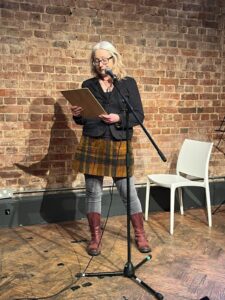
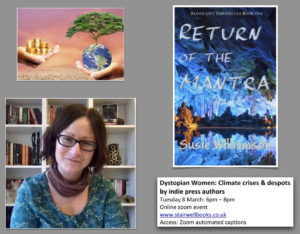
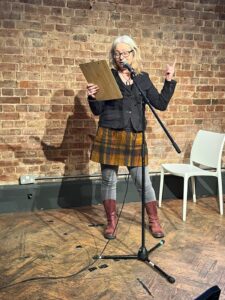
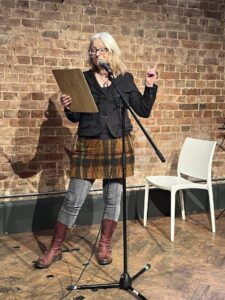
And in celebration of International Women’s Day, I joined the lovely folks of Stairwell Books for an online event, alongside other authors and readers, sharing readings and discussion on the subject of eco feminism, climate change, and the place of fiction. It was great to hear readings from Border 7 and O Man O Clay, two dystopian novels I’ve read and loved. As I gave a reading from my own, Return of the Mantra, I was reminded of the origins of my debut. A fantasy novel with themes of climate change, and contrasting worlds inspired by the landscapes of the Sudan, and South Africa, where I once lived.

Quick recap: The main character is a young woman called Suni. She’s brought up in a desert town ruled by a tyrant leader. All she has known is desert and drought that has lasted for decades. She’s been raised to believe in the old ways of the Mantra, which has a mythology around the cause of the drought. And so begins her story of self-discovery and identity, and a fight for the natural world. She believes the resistance of old are dead, and that there is nothing beyond desert, until she discovers a hidden world where nature is hanging on – I won’t give more away, but on the subject of positivity, I went for an extract that inspires hope.

Click here for the YouTube link to the event, and my extract reading.

It’s what I think fiction can do well, give hope: bring empathy where it’s lacking, shine a light on injustices, show us how strong we can be when the odds are stacked against us, or just allow us the joy of reading. We drive our characters on through thick and thin, and (unless they don’t!) they survive. Themes of climate change run throughout the backdrop of Return of the Mantra. In the following sequels, the story takes a different turn as the world unfolds, but nature still features. I hadn’t necessarily planned it that way, but as I work through Blood Gift Chronicles Book 3, I realise how closely my characters live alongside wildlife. Perhaps there’s hope we can all close the gap between humanity and the natural world.

What are you reading?

For the Love of Books #11

I often think dystopian fiction is a great tool for looking at those uncomfortable truths and predicting what might be if we continue down certain paths. With the recent COP26, it feels timely to mention two reads that serve as a cautionary tale to climate change and the socio-political fallout that brings.

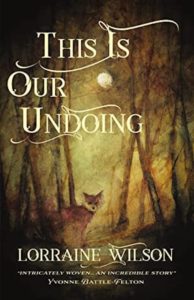
This Is Our Undoing by Lorraine Wilson

This is our Undoing is speculative fiction interspersed with mystery, cli-fi, alternate futures, and a sprinkling of the supernatural. In a near future Europe fracturing under climate change and far-right politics, Biologist Lina Stephenson works in the remote Rila Mountains safely away from London State. A fugitive from her former life, her father persuaded her to get out. Now she is protected by the local militia after signing over citizenship. But following the assassination of a London minister, Lina’s name comes into question, threatening the safety of herself and her family. And to make matters worse, she is trapped with the dead man’s family.

So begins this complex, intricately woven tale, written in the third person although told primarily from Lina’s perspective. The cast is diverse, each battling events greater than themselves. As entwined personal histories are revealed, the characters are left wondering who they can trust and the readers are left wondering who is a reliable witness, making for a compelling plot. A character I particularly enjoyed was a mysterious young boy, Kai, who Lina is inexplicably drawn to. I was left wanting to know more about the boy who fights monsters, but parts of the mystery remain just beyond our reach, leaving space in the narrative for the reader to draw their own conclusions. I also loved the remote mountainous setting and Lina’s role as a biologist studying the conservation of biodiversity. The rich descriptions of place and wildlife were beautifully told, offering an immersive and atmospheric experience that I didn’t want to end. Yet despite the vast landscape the sense of claustrophobia and tensions grow, as the ultimate question is posed: who might you condemn to save another?

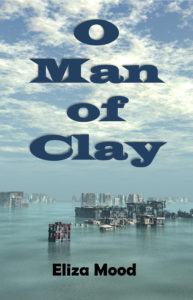
O Man of Clay by Eliza Mood

“They said sea level would rise one day when the polar caps melted and fell into the sea but this was not the future, it was now.”

O Man of Clay offers a dystopian future with a cautionary tale of climate change. After the tsunami hits Eastern England, Scotland, Denmark and the Netherlands, it brings it close to home with Hartlepool as the setting. For those of us in the UK, having a local feel adds power to the message, and the story pulls no punches with the bleakness of that message.

As the walls goes up, three teenagers face being trapped in the flooded zone: Zoe, from Hartlepool, haunted by all she has lost, collecting fragments of humanity in her treasure tin; Volk, a refugee from a Soviet prison colony; and Alma. The present day is woven into each of the character’s pasts, and for me, Alma’s backstory was one I particularly enjoyed. Her ancestors are Buryats, consisting of Evenki hunters and Mongol herders who lived on the shores of Bailgal Nuur. The mythologies and beliefs of an indigenous people are beautifully told, highlighting voices often marginalised but with the most to say and the deepest connections to the natural world and all that is at stake.

I found the story to be a slow burn with literary merit, rather than a fast-paced thriller/adventure. There is huge depth to the prose that meanders with the interlinking past and present, that feel like well-investigated snap shots in time. Time is running out, and while some survivors search for a way to live, others look for ways to die, in a story that reveals the depth, harshness and beauty of humanity and the life we all stand to lose.

What are you reading?