Tag: Rivers Solomon

For the Love of Books #36

With 2026 underway, January is the perfect time to look ahead and make plans. I’m excited for the coming year, for new work that is due to come to fruition, and for opportunities to create, share, and discuss. With events on the horizon, the calendar is looking healthy.

My to-read list is looking healthy too, and I look forward to sharing titles, some of which I’ve been itching to get to for some time now, while others landed more by accident. Oftentimes we stick with authors we know, but it’s always exciting to branch out and discover someone new.  And if you’re looking for inspiration, here are two fantasy reads from authors I would highly recommend.
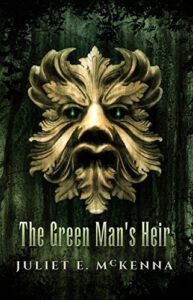
The Green Man’s Heir

By Juliet McKenna

Daniel Mackmain is a man with a secret. He keeps to himself, a lone traveller moving from place to place, picking up work as he goes. But when a girl is murdered, the Derbyshire police take a closer look at this wandering man, and Dan realises that the murder involves the hidden world he was born into. And so begins a contemporary fantasy rooted in ancient myths and British folklore.

The main character’s perspective appealed to me from the start. I appreciated his deep connection with trees and woodland, places he seeks for respite and times of peace while whiling away the hours, carving; an artistic pastime tightly ingrained with identity and heritage. And I appreciated his contemporary voice and straight-forward approach to life, blending easily with the feel of ancient wildwood in his bones, since he is the son of a dryad.  Following Dan’s encounter with the police, where he was fortunately able to give an alibi, a dryad appears to him. It is only the second time he has seen a dryad, the first was upon seeing his dryad mother. These unexpected sightings provide charming reference to folklore, trees and nature, and intrigue that kept me wanting to know more.

I adored the main character’s backdrop, with a childhood whereby he could see what other children could not – scavenging boggarts, and rainbow-winged sprites. The blend of fantasy/folklore/murder mystery definitely worked for me, supported by a main character with a well-defined voice and strong persona able to lead the way as we delve deeper. It brings a whole new meaning to the idea that you can’t run from yourself, or change yourself; you are you, no matter how far you go or how hard you try to hide.

I loved the growing significance of the dryad, Tila, who presents in this world out of a desire to be on her own. Dan wants to talk to her, to get to know her, to discover more about his heritage. It’s also possible she saw the murder, and Dan is keen to gather any information she might have. But dryad’s are a race who live in the present, looking as far as the next season, and care nothing for the past. The intrigue of this ethereal character, combined with our growing understanding of the complex backdrop of the murdered girl, made for an intriguing plot, amid magic, adventure, and the well-carved voice of a main character whose feet remained rooted in the mundane, while his sights were ever drawn to mysterious other realms.

A magical read.
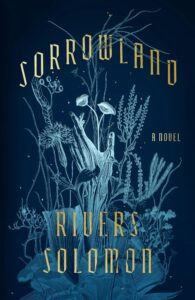
Sorrowland

By Rivers Solomon

Vern had always been ravenous, a hunger that forced her to flee the compound of Cainites in want of something, though she knew she’d never find it. Broken free with an uncanny strength, she retreats to the woods for sanctuary from the deeply religious grip of the compound, Blessed Acres where she was raised, and where her husband, Sherman, is sermon: a marriage designed to contain her. Her child is born free, against a backdrop of howling wolves. Her son is a hungry creature much like herself, who she names, Howling. Soon after, following a suspicious encounter with chasing wolves, his twin, Feral, is born. Vern decided, if the boys asked about their father, she would tell them their father was Lucy, her childhood friend who left the compound before her, a friend she never forgot, who could have been her mate.

The characters are intricately woven, offering haunting depth that left me intrigued to know more of their inner landscapes. I adored Vern’s wild nature, opting for freedom no matter what, birthing alone in the woods, fearless in her endeavours to raise her sons. Her viewpoint also offers fascinating insight into intersex identities and gender politics, as well as broader power dynamics, inclusive of racism and marginalisation featuring as compelling themes.  And from a retrospective lookback at childhood observations, insidious corruption is revealed, from the compound she fled for the wild outside, and inside. Vern’s body is changing, gradual, mesmerising, metamorphosis, that also indicates that she is ready to confront the past and fight for survival, for herself and her family’s.

Compelling narrative delivers a haunting story, journeying through a complex world of motherhood, love, betrayal and lies, and an inner power that refuses to lie dormant. Fearing she is ill, Vern is forced to leave the harsh woodland sanctuary, in a desperate hope she might a friend she never forgot. But the hauntings are real, and the truth is closer than she first imagined. A wonderfully powerful read.

What are you reading?

For the Love of Books #35

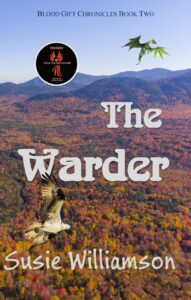
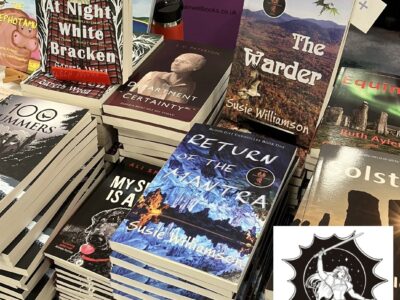
Last week was a busy writing week, working on the third instalment of Blood Gift Chronicles, and tightening the ending. The weekend was a perfect end, sharing poetry at Exeter’s St Nicholas Priory, leaning into the magical. Absorbed in the atmospheric surrounds, I thought of the temple on the island of Evren in my novel, The Warder, where magic stirs in the cavernous walls.

Magic stirs on my bookshelves too, and so I bring you two fabulous reads, with a deeply magical and atmospheric feel.

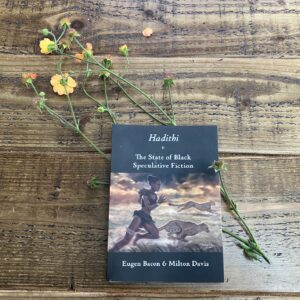
Hadithi & The State of Black Speculative Fiction by Eugen Bacon and Milton Davis

Hadithi begins with a scholarly dialogue about the uniqueness of genre-bending speculative fiction, the diversity of voices contributing from the indigenous and the diaspora, and the powerful blend of own voice narrative.

“Until black speculative fiction is normalised, there’s much work to be done.”

Following this opening, a collection of short stories bring magical tales which speak of ancestry, soul, continuity and discontinuity, all woven through various sub-genres.

Eugen Bacon brings crisp, clear visions of life. Still She Visits is the story of Segomotsi, who is 7,000 miles away from her homeland, Botswana, while her sister, Mokgosi, visits often, arriving like an African daisy: radiant, luminescent and big in bloom. As Segomotsi feels her way through the entanglements of sisterly love, she is left facing the stark truths of grief. In The Water’s Memory, Adaeze and Aloyse share the joy of their marriage, the sadness of Adaeze’s passing, and a funeral of dancing feet celebrating death as they would life. It’s a reminder of the fragility of life, the strength we strive to find for one another, and the understanding of how love can reach into those silences. In Baba Klep, Clyde and Revita crash land into a post-apocalyptic African landscape, each wearing their cleft lip with differing portrayals: for Clyde it displays the inconvenient physical pain; for Revita, it is part of her strength and beauty. On a quest to create a new, sustainable solution for the landscape, Revita’s shrewd intelligence and knowledge brings the landscape to life with the sound of locusts and birds showing the way to water, and a crude irrigation system watering an array of crops: maize, peas, cassava, bananas, beans, sweet potatoes and millet. And the tale, Ancestry, is a short, sharp shock. Aptly exploring the marginalisation of women and girls in patriarchal societies, justice brought like a punch in the gut… from a vampire.

Milton Davis brings colourful, crisp imagery and a thought-provoking lens. In Carnival, Antwon steps out into an inventive futuristic world of holoscreens, dancing tattoos, and rideout aerial traffic transporting him to the ultimate destination of Carnival, for a ‘fleeking’ good time. In Down South, Roscoe, originally from Alabama and now chauffeur to Miss Liza, agrees to journey back down south to find Miss Liza’s lost child. He finds lodgings in a local juke joint, an atmospheric place, the air heavy with a wetland organic aroma, and the sound of raucous laughter against a strumming guitar. But the danger of the times is never far away, making for an edge-of-your-seat read that makes the ending all the more satisfying. And in The Swarm, Famara, a warrior for the elders, journeys into the barren lands of the Sahel, where he sets up his makeshift lab. He soon discovers that the ground isn’t merely sand. The locust apocalypse is underway, but nothing is as it seems.

A truly exciting collection delivered through a refreshing lens. Highly recommended.

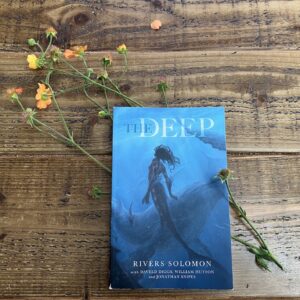
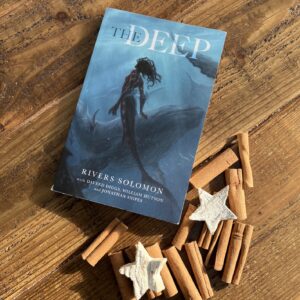
The Deep by Rivers Solomon

The Deep is the story of water dwelling descendants of pregnant African slave women, who were tragically thrown overboard into the ocean. The offspring of these descendants are called Wajinru, and were born breathing water as they did in the womb. Whales were their second mothers, who fed them, bonded with them, and took them to the deepest parts of the ocean where they could be safe. They made their home on the seabed, where the trauma faced by their ancestors is forgotten by everyone except for the historian, keeper of memories.

The main character, Yetu, is the current historian, one of extraordinary sensitivity, forced to dull her own senses to save being overwhelmed by the traumas of history. Only at the Remembrance can she find peace. It is a ceremony where she shares the memories, satisfying the Wajinru’s hunger for knowledge, a sharing that allows her to be free of the past for a time. But when the ceremony is over, memories will be returned to her, since the role of the historian is to carry the memories so others don’t have to. For Yetu it is a great burden, cursed with remembering the painful and wonderful, traumatic and the terrible, a burden so heavy she would hand herself recklessly to the sharks. She hopes that her ancestors will not continue to expect her to endure the burden, but they are needy, and so she leaves, to save herself from dying, since for Yetu, continuing to remember would be suicide.

‘The place of belonging is where loneliness ends.’

While Yetu’s story holds tragedy, it is also heart-warming. Her sensitivities are endearing, contrasted with the courage to venture into the unknown. I found the whole premise of the story to be compelling, and enjoyed the immersion into this watery world, told with a kind of poetic justice, as well as the rationale of biology and ecology explained enough to bring to life the intriguing fantastical. With themes of belonging, identity, and being true to oneself, this is a thought-provoking reflection echoing the brutal tragedy of the Atlantic Slave Trade, as well as being a colourful tale, filled with magic, captured in a watery world.

What are you reading?

Channelling Rage in SFF

Sunshine in March, while in the novel, character arcs are grappling with some big emotions. It’s a topic I look forward to speaking on at this year’s Eastercon coming soon to Belfast, in particular, the ways in which we can deal with anger and rage in our plot lines. We’re familiar with anger leading to the dark side – Anakin Skywalker in Revenge of the Sith, Harvey Dent in The Dark Knight, and Magneto in the 2000 movie X-Men – anger and rage rooted in fear that leads them down a path of no return. But is this end inevitable, and how else might we explore this powerful emotion?

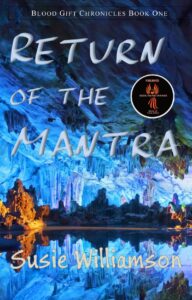
My fantasy series, Blood Gift Chronicles, begins in a patriarchal world with wealth inequalities, environmental destruction, and gender based violence. The stories work to fight back against those power structures to work towards environmental and social justice. There are a number of protagonists and antagonists, with varied responses to their context, and various ways in which power and strength are defined. Among the protagonists, I subvert gender expectation, breaking the notion of traditional gender roles, and incorporate themes of identity, mental health, and being true to oneself. I have a female character who has been subjected to cruelty, and responds by becoming an assassin. I have another female character who has also been subjected to cruelty, and instead looks to community and connection, working together for peace and justice. I have a male character who expresses his rage inwardly, a path of self-destruction whereby he becomes his own antagonist for a while. And I have characters who express rage outwardly, in so far as a physical transformation with far-reaching consequences. The difference is around context, and explores the power of support and breaking social isolation, as well as the need for community, connectivity and shared values. If anger is rooted in fear, it’s interesting to consider what might be able to disrupt the fear to produce a different response. It’s also interesting to see what happens when this doesn’t work, if only as a warning of what can happen if we can’t fix things.

I recently read The Deep by Rivers Solomon, a stirring novella inspired by the real-life African slave trade. In the story there are water dwelling descendants of pregnant African slave women, who were tragically thrown overboard into the ocean. The offspring of these descendants are called Wajinru, and were born breathing water as they did in the womb. Whales were their second mothers, who fed them, bonded with them, and took them to the deepest parts of the ocean where they could be safe. They made their home on the seabed, where the trauma faced by their ancestors is forgotten by everyone except for Yetu, the historian and keeper of memories. She’s forced to dull her own senses to save being overwhelmed by the traumas of history, and it’s only at the Remembrance where she can find peace. Because it’s at this ceremony where the whole gathering holds the memories, affording her some respite. But when the ceremony is over, memories are returned to her, since those memories are so intense and tragic, only the historian is able to shoulder the burden. But the burden is wearing her down, and so at the next Remembrance, Yetu runs away, abandoning her kin to save herself.

This character has got real ragged emotions, filled with rage, pain, guilt and frustration. The memories were killing her, yet there is also no peace for her having left her family and community behind. Themes of identity and belonging are explored, as well as personal and communal responsibility in tackling the big stuff.

Which leads me back to the world in my own work-in-progress, and a centuries long rage with far reaching consequences and seismic hope.

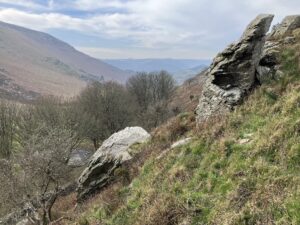
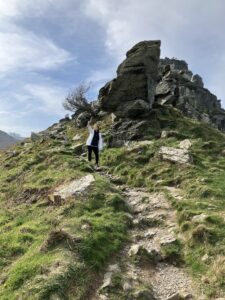
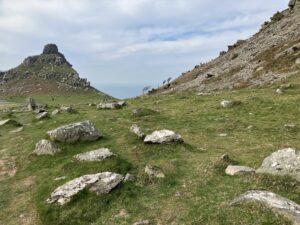
Meanwhile, on a different note, in the real world, a visit to the Valley of Rocks for some heady North Devon coastal heights.

The mountain goats were hiding though their reputation proceeds them, rebel goats known for head-butting sheep right off the slopes, and dividing the town with their rebel antics… I did meet a Pyrenees mountain dog, a gentle giant whose presence was reassuring at a place of dizzying heights. The door was intriguing and should come with the warning sticker, ‘Do Not Enter,’ because to do so involves falling off a cliff. It is a place of imagination and stories, abound with pixie folklore, a place of scattered rocks randomly strewn as though tossed by giant hands. And it was a wonderful breath of fresh air…

xxx