Tag: Sci-fi

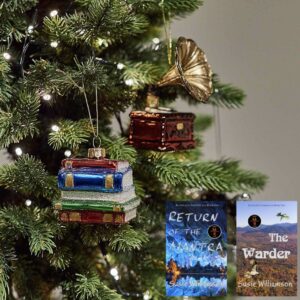
Susie’s SFF Book Advent 2025

Wishing everyone all the very best for a festive season filled with joy and wonder, and books. And for those looking for some inspiration, here’s a few of my favourite reads for the SFF Book Advent 2025, in no particular order…
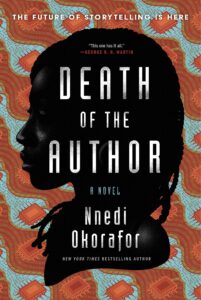
Day 24 of Book Advent – Death of the Author by Nnedi Okorafor. Zelu’s mother was a Yoruba princess, her father is Igbo with a PhD. She is paraplegic, flawed, sassy, hard-working, and an author, writing robots into a complex world of death, circuits, energy and what it means to be human.

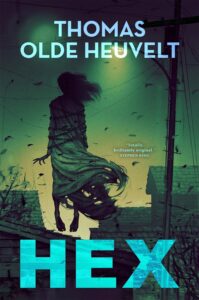
Day 23 of Book Advent – Hex by Thomas Olde Heuvelt. A 17th century woman accused of witchcraft in the days of puritanical colonies, changed, eyes and mouth sewn shut, haunts the town of Black Spring. The townsfolk’s responses are fascinating and chilling. Brilliant and horrifying read.

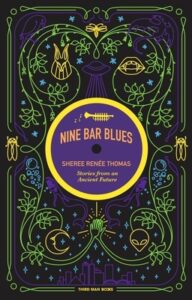
Day 22 of Book Advent – Nine Bar Blues by Sheree Renee Thomas. Golden mermaids, curse-bound sisterhoods, poisoned landscapes and an otherworldly earth. Evocative, inventive and contemporary tales that haunt, uplift and ascend, while moving with the rhythm of cultural change.

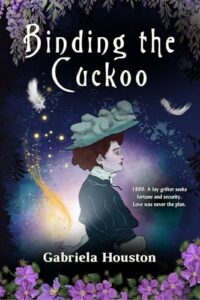
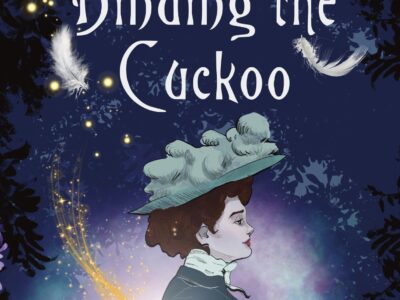
Day 21 of Book Advent – Binding the Cuckoo by Gabriela Houston. In high society London, Hare must keep her mythic status secret, in this historical romantasy where fae and human collide and Eastern European folklore is brought to life. A vivid and magical tale beautifully told.
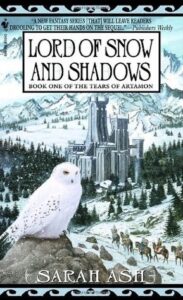
Day 20 of Book Advent – Lord of Snow and Shadows by Sarah Ash. In the wintry kingdom of Azhkendir, Gavril must face his true identity, and uncover the truth of the shadow. With a vivid & fearless supporting cast, this fantasy is a masterclass. A wonderful winter read.

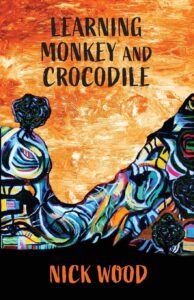
Day 19 of Book Advent – Learning Monkey and Crocodile by Nick Wood. Collection of shorts with immersive African landscapes, vivid imagery, and a rich tapestry of imagination, folklore, dread and desire. A clear and inventive lens, astute, innovative and unique.

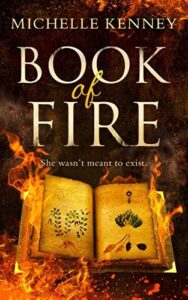
Day 18 of Book Advent – Book of Fire by Michelle Kenney. Talia and her friends navigate the ultimate rescue mission in a cataclysmic world. Feral people, hidden forests and a holy war. Lifedome is a landmark, monsters can be heroes, and fantasy, science and mythology form a perfect blend.

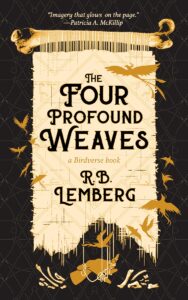
Day 17 of Book Advent – The Four Profound Weaves by R.B. Lemberg. Weaves woven from wind to signify change, invisible threads woven into whispered weaves, a search for the weave of death, and a Nameless Man searching for his name amid his journey of transformation.
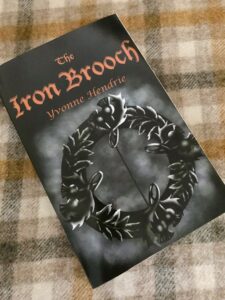
Day 16 of Book Advent – The Iron Brooch by Yvonne Hendrie. 1940s London, Brigid receives a mysterious heirloom as her something old on her wedding day. Strange callings bring visions of Scotland’s Doon Hill, time slips, the veil grows thin to mysterious fae, & Scotland awaits.

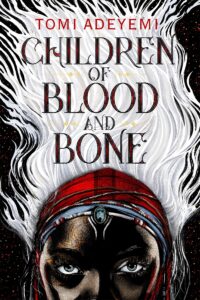
Day 15 of Book Advent – Children of Blood & Bone by Tomi Adeyemi. The soil of Orisha once hummed with magic, but the maji were killed. Now danger lurks, snow leoponaires prowl and vengeful spirits wait in the waters, as Zelie & her companions head a quest to see magic restored.

Day 14 of Book Advent – Threading the Labyrinth by Tiffani Angus. American Arts dealer, Toni, uncovers her inheritance in a haunted Manor House, where mysterious gardens change in twilight, revealing ghosts from the past. A rich, immersive & haunting read.

Day 13 of Book Advent – The Green Man’s Heir by Juliet McKenna. Contemporary fantasy rooted in ancient myth & British folklore. The son of a dryad seeks to understand his heritage while his sights are drawn to mysterious other realms. Meanwhile, there is a murder case to solve.
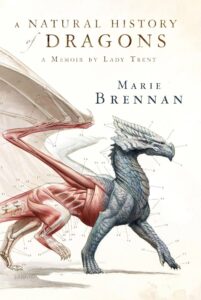
Day 12 of Book Advent – A Natural History of Dragons by Marie Brennan. Lady Isabella Trent defies Victorian conventions with her love of books, natural history & dragons. From childhood obsession collecting sparklings, to a dragon-finding expedition to the mountains of Vystrana.

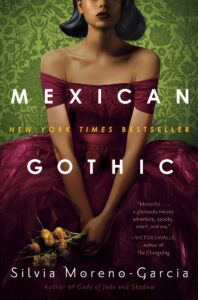
Day 11 of Book Advent – Mexican Gothic by Silvia Moreno-Garcia. 1950s Mexico: a remote mansion, an eccentric macabre family set a menacing scene of wealth, fading empire, & family secrets of violence and madness. Noemi fights to stand her ground, but the family’s indomitable will is strong.

Day 10 of Book Advent – At Night White Bracken by Gareth Wood. Realities collide, dread & merriment entwine, in a world of malevolent, sinister magic. Cosmic horror blending magic with pallid reality. A horrifying, brilliantly inventive, thought-provoking tale beautifully told.

Day 9 of Book Advent – An Unkindness of Ghosts by Rivers Solomon. An extraordinary MC, flawed, self-effacing, courageous, fierce and with a huge heart. On board a space ship organised like the Antebellum south, Aster works to sow the seeds of civil war. Deeply memorable.
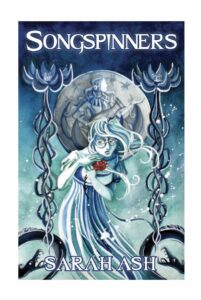
Day 8 of Book Advent – Songspinners by Sarah Ash. Architects of an ancient Undercity lost to myth; a world of mystical reservoirs, musical telepathy, faeries & dragonfly, where music is forbidden, yet flows like water from Orial. Intricately woven, evocative and beautiful.

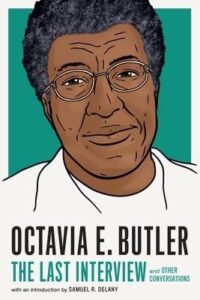
Day 7 of Book Advent – Octavia E. Butler, The Last Interview. I savoured every word. ‘Feminism is freedom. It’s the freedom to be who you are and not who someone else wants you to be. And science fiction? Science fiction is wide open. You can go anywhere your imagination can go.’

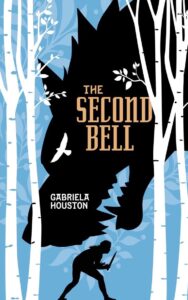
Day 6 of Book Advent – The Second Bell by Gabriela Houston, one of my all-time fave reads. Salka was born a striga, a girl with two hearts. In a world that believes her to be a monster, she is considered a demon, abandoned into exile. But Salka is drawn to her true nature.

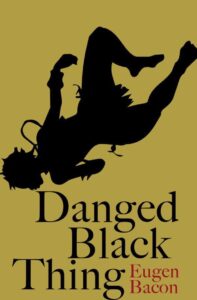
Day 5 of Book Advent – Danged Black Thing by Eugen Bacon, a unique & inventive collection of shorts traversing the west & Africa, bringing tales of migration, gender & class, patriarchy & womanhood, pushing boundaries of creativity & science, revenge, aliens, ancestors & beasts.
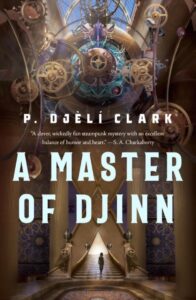
Day 4 of Book Advent – A Master of Djinn by P.Djeli Clark, with a secret brotherhood, a Soudanese mystic, an assassin with powerful magic, sorcery conjured in hookah smoke, gold masks, ghouls & elemental djinn, this is a mystical tale of identity, exploitation, oppression & magic.

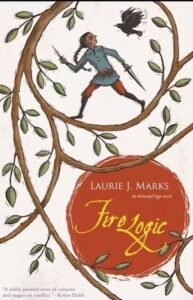
Day 3 of Book Advent – Fire Logic by Laurie Marks, epic war fantasy with guerrilla warfare among the farmsteads and iron workers, with a wonderfully diverse cast reflecting the equality they are fighting for, and elemental magic and touches of fantasy bringing colour to life.

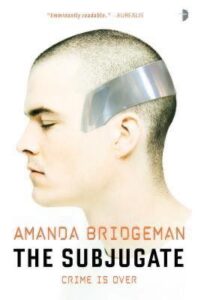
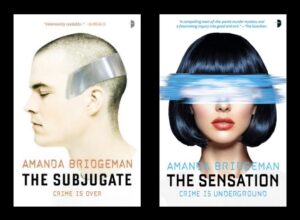
Day 2 of Book Advent – The Subjugate by Amanda Bridgeman; in a watchful world humanity is complemented by AI, cities are ruled by security companies, murder is commonplace & violent criminals face extreme ‘treatments’. An intriguing future dystopia tackling big questions.

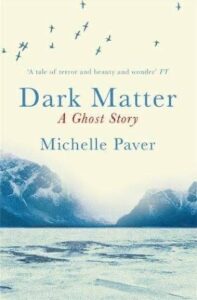
Day 1 of Book Advent – Dark Matter by Michelle Paver, deliciously creepy & atmospheric, with Jack Miller on an arctic mission where a malevolent spirit walks the icy wilderness. Lethal accidents, marauding bears, science, madness & terror. Lingering dread and fabulously haunting.

Happy Reading

&

Wishing you a wonderful and magical, book-filled Xmas.

đŸ’«


For the Love of Books #35

Last week was a busy writing week, working on the third instalment of Blood Gift Chronicles, and tightening the ending. The weekend was a perfect end, sharing poetry at Exeter’s St Nicholas Priory, leaning into the magical. Absorbed in the atmospheric surrounds, I thought of the temple on the island of Evren in my novel, The Warder, where magic stirs in the cavernous walls.

Magic stirs on my bookshelves too, and so I bring you two fabulous reads, with a deeply magical and atmospheric feel.

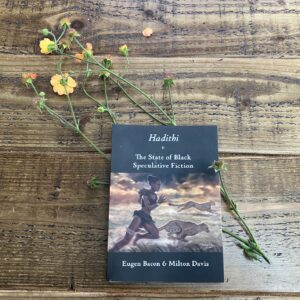
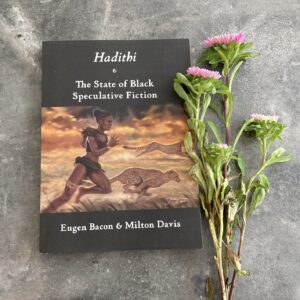
Hadithi & The State of Black Speculative Fiction by Eugen Bacon and Milton Davis

Hadithi begins with a scholarly dialogue about the uniqueness of genre-bending speculative fiction, the diversity of voices contributing from the indigenous and the diaspora, and the powerful blend of own voice narrative.

“Until black speculative fiction is normalised, there’s much work to be done.”

Following this opening, a collection of short stories bring magical tales which speak of ancestry, soul, continuity and discontinuity, all woven through various sub-genres.

Eugen Bacon brings crisp, clear visions of life. Still She Visits is the story of Segomotsi, who is 7,000 miles away from her homeland, Botswana, while her sister, Mokgosi, visits often, arriving like an African daisy: radiant, luminescent and big in bloom. As Segomotsi feels her way through the entanglements of sisterly love, she is left facing the stark truths of grief. In The Water’s Memory, Adaeze and Aloyse share the joy of their marriage, the sadness of Adaeze’s passing, and a funeral of dancing feet celebrating death as they would life. It’s a reminder of the fragility of life, the strength we strive to find for one another, and the understanding of how love can reach into those silences. In Baba Klep, Clyde and Revita crash land into a post-apocalyptic African landscape, each wearing their cleft lip with differing portrayals: for Clyde it displays the inconvenient physical pain; for Revita, it is part of her strength and beauty. On a quest to create a new, sustainable solution for the landscape, Revita’s shrewd intelligence and knowledge brings the landscape to life with the sound of locusts and birds showing the way to water, and a crude irrigation system watering an array of crops: maize, peas, cassava, bananas, beans, sweet potatoes and millet. And the tale, Ancestry, is a short, sharp shock. Aptly exploring the marginalisation of women and girls in patriarchal societies, justice brought like a punch in the gut
 from a vampire.

Milton Davis brings colourful, crisp imagery and a thought-provoking lens. In Carnival, Antwon steps out into an inventive futuristic world of holoscreens, dancing tattoos, and rideout aerial traffic transporting him to the ultimate destination of Carnival, for a ‘fleeking’ good time. In Down South, Roscoe, originally from Alabama and now chauffeur to Miss Liza, agrees to journey back down south to find Miss Liza’s lost child. He finds lodgings in a local juke joint, an atmospheric place, the air heavy with a wetland organic aroma, and the sound of raucous laughter against a strumming guitar. But the danger of the times is never far away, making for an edge-of-your-seat read that makes the ending all the more satisfying. And in The Swarm, Famara, a warrior for the elders, journeys into the barren lands of the Sahel, where he sets up his makeshift lab. He soon discovers that the ground isn’t merely sand. The locust apocalypse is underway, but nothing is as it seems.

A truly exciting collection delivered through a refreshing lens. Highly recommended.

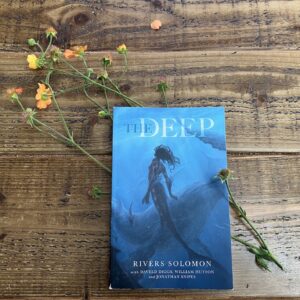
The Deep by Rivers Solomon

The Deep is the story of water dwelling descendants of pregnant African slave women, who were tragically thrown overboard into the ocean. The offspring of these descendants are called Wajinru, and were born breathing water as they did in the womb. Whales were their second mothers, who fed them, bonded with them, and took them to the deepest parts of the ocean where they could be safe. They made their home on the seabed, where the trauma faced by their ancestors is forgotten by everyone except for the historian, keeper of memories.

The main character, Yetu, is the current historian, one of extraordinary sensitivity, forced to dull her own senses to save being overwhelmed by the traumas of history. Only at the Remembrance can she find peace. It is a ceremony where she shares the memories, satisfying the Wajinru’s hunger for knowledge, a sharing that allows her to be free of the past for a time. But when the ceremony is over, memories will be returned to her, since the role of the historian is to carry the memories so others don’t have to. For Yetu it is a great burden, cursed with remembering the painful and wonderful, traumatic and the terrible, a burden so heavy she would hand herself recklessly to the sharks. She hopes that her ancestors will not continue to expect her to endure the burden, but they are needy, and so she leaves, to save herself from dying, since for Yetu, continuing to remember would be suicide.

‘The place of belonging is where loneliness ends.’

While Yetu’s story holds tragedy, it is also heart-warming. Her sensitivities are endearing, contrasted with the courage to venture into the unknown. I found the whole premise of the story to be compelling, and enjoyed the immersion into this watery world, told with a kind of poetic justice, as well as the rationale of biology and ecology explained enough to bring to life the intriguing fantastical. With themes of belonging, identity, and being true to oneself, this is a thought-provoking reflection echoing the brutal tragedy of the Atlantic Slave Trade, as well as being a colourful tale, filled with magic, captured in a watery world.

What are you reading?

For the Love of Books #34

In the midst of winter I’m immersed in fantasy, both in writing the next instalment of my fantasy series, and in my current read, an epic saga in a magical world. More on those another time. It’s a genre rooted in folklore, and so I thought I’d share a few recent non-fiction reads, which touch on the subject of folklore from different angles depending on the cultural lens.

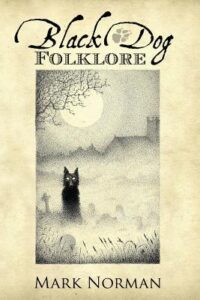
Black Dog Folklore 

by Mark Norman

Black dog folklore is a fascinating read, bringing to life a subject that in many ways feels familiar: from the well-known idea of hell hounds, to the well-loved story of Hounds of the Baskervilles, to The Magic Tinderbox. But while reminiscing on favourite childhood tales of unforgettable dogs with eyes as big as saucers, the extensive and varied eye witness accounts at the core of this book take us on a fascinating journey. Just as dogs have become central to family life, so ghost dogs are woven into our folklore. This well-drawn collection offers an extensive and comprehensive study of these elusive canines, as guardians, protectors and deliverers of omens, stories that illuminate, explain and deliver the eerie, while highlighting the plethora of threads woven into the fabric of our own cultural backdrop. Expertly told, while delivered with a seamless conversational style, make this a page turning read, and one I am sure I will revisit.

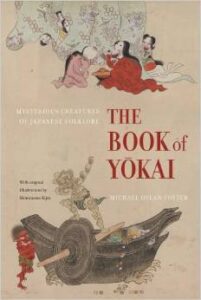
The Book of Yokai; Mysterious Creatures of Japanese Folklore

by Michael Dylan Foster, Shinonome Kijn (Illustrator)

The Book of Yokai is an extraordinary book summed up by an extraordinary word, Monsterful, to denote the rare and truly marvellous manifestations of otherness that the undefinable category of Yokai brings. Through informative encyclopaedic narratives, punctuated by gorgeous illustrations, we are taken on a journey of the weird and wonderful, the dreamlike and the haunting, through experiences that don’t easily fit into our everyday understanding, yet are somehow relatable by the bizarreness. I enjoyed the nod to well-known characterisation from the much loved Studio Ghibli, and the teasing delivery that so eloquently describes a spirit world just beyond the reach of language, where limitless yokai creatures occupy the space between. This is a deep dive into Japanese folklore, that is inventive, surprising, inspiring and suitably unsettling.

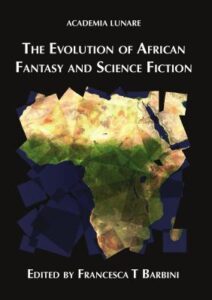
The Evolution of African Fantasy and Science Fiction

Edited by Francesca T Barbini

This small book is an important read, beginning with discussion into how far back SF dates, and how SF and colonialism emerged in parallel, exclusive of African Science Fiction. Technological developments, science, and anthropology, crucial to SF, were intertwined with colonial history and ideology, made possible through military dominance, and leading to the idea of colonised subjects with their cultural beliefs being seen as inferior.

The emergence of African Fantasy and Science Fiction is essential in changing this narrative, along with stories from Asia and indigenous voices from around the world. Technology has facilitated circulation and consumption of these stories, therefore showing its market value to established publishers, consequently creating space for more writers to offer their perceptions and strengthen positive perceptions. In turn this offers an essential sense of belonging to readers worldwide, offering cultural insight and contributing to multi-cultural awareness. There was a sobering reminder that Africans have been producing science fiction, fantasy, magical realism since the genre began, since storytelling for all of us is as old as time, leaving a huge body of work, past and present, to explore. It’s an exciting future with voices such as Nnedi Okorafor continuing to weave African folklore into Africanjujuism stories, and creating inventive Africanfuturism leading the way. An inspiring, empowering and thought-provoking read.

What are you reading?

For the Love of Books #32

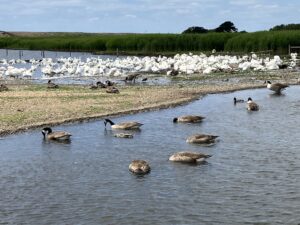
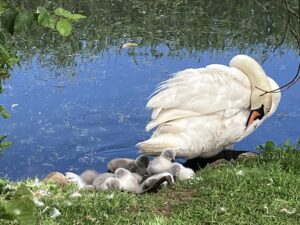
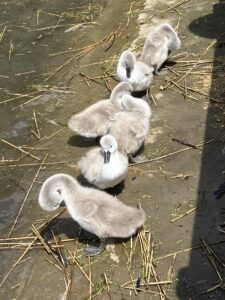
A nod to my last post themed on nature, and a recommendation following a gorgeous day out in Dorset at Abbotsbury Swannery. Tipping a dramatic coastline, this unique and natural wildlife habitat is the only place in the world where you are able to walk through the heart of a managed colony of free-flying, nesting Mute Swans. And what a place to live – it’s no wonder they choose to stay.


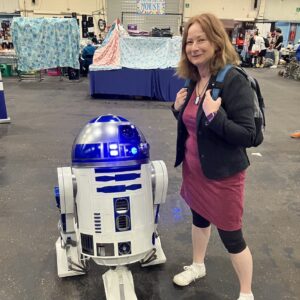
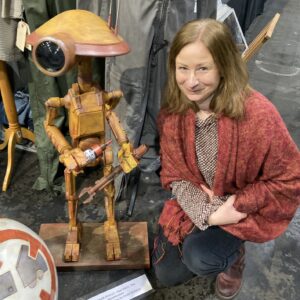
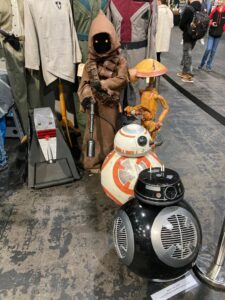
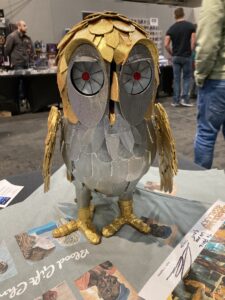
And after a big breath of avian sea air, it’s back to the realm of stories with Comic Con. Star Wars is clearly a favourite, and the full size array of robots through the franchise. They may be made of metal, but they are far from expressionless.

The emergence of AI and its interplay in the art world is a big topic. From droids, space travelling humanoids, alien terminators, and colonising machines set to take over the world, robotics and AI have long featured in our stories. Recently I was introduced to a fascinating series, with a whole new take on this vast subject:

The Subjugate; by Amanda Bridgeman

In a watchful world where humanity is complemented by AI, cities are ruled by security companies, yet crime and murder are still commonplace. The story features two detectives, Salvi Brentt and Mitch Grenville, each one an interesting character in their own right, with intriguing complex backstories and a dynamic that at times complimented the dis-ease of the thriller, which I found compelling.

The setting of the story is well-drawn, an imagined future where ethical limitations of AI are subtly observed, with talking robo-cleaners and dedicated AI prefilling data of transcriptions and interviews, yet always with a human hand to sign them off to ensure their eligibility in court. Yet some pullaway communities are resisting technological advances. Just outside the city, the unincorporated community of Bountiful is one of the leading pullaway communities, and one of the most religious. Founded in 1934, it is a town built on religion, populated by the Children of Christ. There’s no internet, mobile phones or computers, although it does have a close relationship with the nearby Solme Complex. The Solme Complex houses violent criminals called Subjugates, who undergo extreme treatments involving religion and technology, and include painful chemical castrations and implanted neural technology which can be used to shock into submission. There are interesting themes around redemption, forgiveness and freedom from sin, with aptly disturbing methods. Subjugates who are successfully converted over the course of several years of ‘treatment’ are called Serenes. They are released unsupervised but with the neural implants recording electrical activity in the brain. When heightened emotion is detected, it triggers a visual alarm in the silver crown worn by Serenes, called a halo.

Following the discovery of a young woman’s body in the community of Bountiful, the two detectives head out to investigate. A discovery of biolume at the scene, bacterial natural lighting, leads them to the Solme Complex, with Subjugates the prime suspects. As the investigation continues, further layers of the world are revealed, with the relevant question of ‘how far is too far’ with technology explored through inventive examples, including augmented realities where avatars are free to play out forbidden desires. There are questions around, just because you can, should you, and are we all slaves to something whether it be religion, technology, or law enforcement? And there are themes around how this all connects to freedom and control. In a bid to be free, do we just end up creating further structures, disciplines and controls? Is freedom truly possible in a world of corruption? I enjoyed the exploration of these big questions, the intriguing future dystopian world, and contrasting characters leading this fast-paced sci-fi thriller that kept me wanting to know more.

The Sensation; by Amanda Bridgeman

Salvi Brentt had killed a man, and he had almost killed her. Under psych review she was cleared for active duty and has a new partner, the department’s dedicated AI, Riverton. A case opens when the body of 34-year-old Devon Barker is found in Sensation. A woman, Myki Natashi, is discovered unconscious in the bedroom by police, who had responded to a domestic disturbance. Myki doesn’t know what happened, and only remembers dinner the night before with Devon. Vincent Calabri was seen in the area, a man with a small rap sheet in the employ of detective Francis Melon, who is Myki’s ex-boyfriend of 3 years. Melon works in the financial industry, a known acquaintance of John Dorant, affording him loose ties to organised crime, and friends in high places. This case is also coupled with the murder of undercover officer, Caine, and the disappearance of the Chief’s daughter into a drug gang.

As in the first book of the series, I enjoyed the character arcs, and in particular the main character, Salvi, a complex woman with a past, and strength to face herself and get the job done. She is still seeing her old partner, Mitch, which was an interesting aspect of her character development in the first book, and continues to add interest in this sequel. Previously, Salvi had faced two serial killers, and one was still alive: Edward Moses, Subjugate-52, locked up in the Solme Complex. Subjugate-52 has been asking for Salvi. He hasn’t received what was promised him after helping Salvi in the last case. He was promised to become a Serene, but Salvi disappeared on him, renegading on her word. Now she is concerned what level of deception he is capable of, and how he might manipulate access to the wider world.

The development of the role of AI in this sequel was particularly interesting. Talking robo-cleaners have names, and the AI, Riverton, is humanised through friendly interactions, showing apparent consideration to which Salvi responds in kind. Hackers cause chaos to evidence by wiping CCTV footage, and more sinister, they hack neural implants that leave a brain wide open to abuse and full-on takeover. A broad range of available technology sees a further reduction in human/human interaction, with drone surveillance, VR headsets and tasers, robot dancers, and holographic forms. Neural tech is also injected in drug form, rendering a person entirely helpless to being used as a sex droid. There are interesting questions here, since the drug lowers a person’s inhibitions and heightens sexual desire, leading to sex. But this is under the influence of a drug, illegally administered without consent, and therefore constitutes rape.

Tech used to keep subjugates in line can equally be used to keep slaves in line, adding a further, compelling sinister edge. Salvi is on a deadly mission to uncover truths, and among the truths are: where do we draw the line, who is good and who is bad or is society just lurking somewhere between, what is right and wrong and who has the right, who is hunter and who is prey? Technology affords power, and with it comes responsibility, but is anyone responsible enough? These are questions I am left with, making this an inspiring read.

What are you reading?

For the Love of Books #26

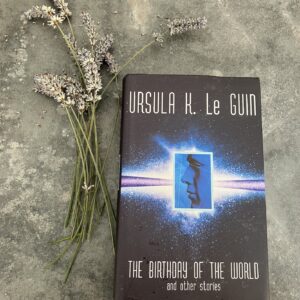
If ever I needed a reminder of the heights of great worldbuilding, this collection, from one of our great SFF pioneers, Ursula Le Guin, offers a masterclass. Eight short stories and novellas bring us worlds near and far, those travelling between worlds, and shifting perspectives from outwards to inwards with thought-provoking poignancy.

The Birthday of the World; by Ursula Le Guin

To give you a sneak peek into the inner workings


The Birthday of the World

The Birthday of the World is considered to be the time the sun stands over Mount Kanaghadwa, when people count themselves a year older, although the rituals and ceremonies are no longer remembered. In a society struggling with their concept of god, the narrator reflects on their own beliefs, rituals and ceremonies, layering a world where gods dance and die, and wild dragons fly. But with wars at the borders, lands have grown too large and the existence of God itself is threatened. The world must die so that God may live, and so the narrator is left pondering the identity of God itself.

Old Music and the Slave Women

Esdan, a chief intelligence officer, ends up on a clandestine mission during a civil war. Intercepted by government forces, he is imprisoned on a large slave estate, where his perspective becomes increasingly limited. In a brutal world, this is a story of survival, and hopeful endeavour in the coming revolution. Will the rebellion reach them? From humiliating violence, to muddy waters of human inequity in supposed liberation, to the failings of world construct to deliver utopia, it is in the bonds between slaves that kindness and comfort is found, and where the heart of the story lies.

Paradise Lost

On a multi-generational voyage to a potentially habitable planet, Liu Hsing and Nova Luis are members of the fifth generation born on the space ship. Many are excited by the idea of discovery, a planet to explore and send information back to the human species. But some people, especially the older generation, subscribe to the religion of Bliss – the state of a blissful journey, with no end. For them, Bliss is the only reason to stay alive. Liu and Nova are faced with followers of the religious cult who question if living on a planet is such a joy. There are also environmental themes, highlighting the challenge of making change, and the overall question of what is natural and what is not. An interesting read, fascinating in its construct, and thought-provoking in the themes of isolation, religion and utopia.

Solitude

Solitude is told by the narrator, as she reflects on her experiences growing up on Eleven-Soro. Her mother was an Observer, whose work involved settling among the native people of Eleven Soro, to learn about this complex alien world. Cultural differences between mother and daughter eventually drive them apart. Where the mother shuns the alien culture, the narrator adopts it as her own, wanting to grow her soul and experience what it means to be  a person of that culture. It is a theme reflective of generational confusion, complicated by outside influence. It is also an interesting use of perspective, approaching the culture of Eleven-Soro from a colonised mindset, yet entirely shifting perspective onto a young woman who becomes part of it. Cultural norms are highlighted, which require societies of modest population, driven by a desire for solitude and the social norm being introverts, perhaps essentially selecting for autism. In true style of Ursula Le Guin, subverted expectations are delivered with ease, which illuminate and surprise, in this creative and thought-provoking world.

The Matter of Seggri

Set in the dystopian society of Seggri, the story is written as a first contact report on the ship’s log of the Wandership. The captain describes a complex society which demonstrates gender as a social construct. Gender expectation is subverted and replaced with inventive roles. The impact of colonialism is also questioned, with consideration given to a society destabilised by outside contact. Previous colonial interference messed with chromosomes, which now results in there being sixteen women for every one man. In the present day, men have all the privilege and women have all the power. Given the opportunity, would men cling to their privileged status or demand freedom, and would women resist giving up their power? Would the sexual system break down?

Unchosen Love

In a world textured with colour, legend and mystery, a polygamous society is structured around family units called sedoretu. Hadri has been chosen to join one such family, after a man seeks out his affections. Homosexual and heterosexual coupling is commonplace, and various aspects of relationships are explored, including the more insidious coercive control.

‘Being unhappy in a room is worse than being unhappy outdoors.’

It is following one mysterious encounter that Hadri comes to realise his true feelings. It is a startling discovery, not least for himself, and brings with it a tantalising coming-of-age feel.

Mountain Ways

This story continues with the themes from Unchosen Love, with society structured around the same sedoretu units. Two women fall in love outside of convention, but over time they conform and strive to form a sedoretu. Through it we see the cost of compromise, the bitterness of conformity and restriction, a stark contrast to two previously independent souls. It was an intriguing and illuminating play on character, that also undoubtedly left a bitter taste. There was also an interesting interplay with the natural world, challenging the concept of ownership. I particularly enjoyed the portrayal of environmental equity.

Coming of Age in Karhide

Set on the fictional planet of Gethen, a place where adults have no fixed gender identity, the story follows Sov Thade Tage em Ereb, a teenager living in a large communal home in the Karhidish city of Rer. As Sov experiences biological changes, it is clear they are ready for kemmer, held in a communal Kemmerhouse for those sexually receptive. Any children conceived in the Kemmerhouse are raised in the communal home, the hearth. Sov and their friend, both ready for kemmer, express fears that being in kemmer is dehumanizing, being seen as a sex machine. And so Sov’s coming of age story is told, of changing bodies and sexuality that was utterly relatable, as well as a meaningful alternative look into gender identity in a place where, quite simply, love is love.

What are you reading?

Layers

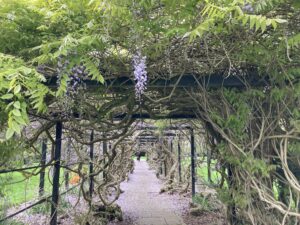
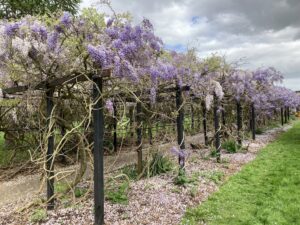
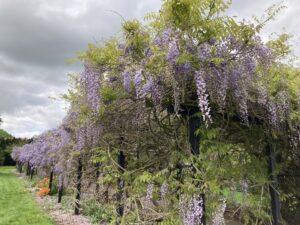
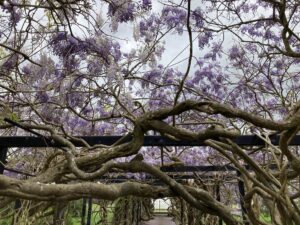
Graced by warmer weather, I recently visited wisteria tunnel, lucky to catch it in full bloom. Eye-catching from a distance, intriguing up close, with a heady floral aroma that brings a hazy shift in time, fluctuating shades of purple that are mesmerising to the eye, and criss-crossing, weaving, winding branches with pathways to everywhere and nowhere
 Combined with the surrounding parkland flora and fauna, and the human traffic strolling by with all of what we carry, and it’s a complex, layered scene. It’s an analogy I recently thought of, akin to storytelling.

Talk of worldbuilding to a SFF writer is like bread and butter. I deal in worlds, and within those worlds, different lives, perspectives, roads travelled, survival and future aspirations. There may be a thread I’m primed to process, a theme that motivates, but ultimately it starts with a world I’m keen to explore. Plots, characters, themes are common to all stories, but imaginative worlds are the reason we return. Once we have an idea of the world, we can build in elements of friction, stumbling blocks to weave stories around.

But first comes the world, underpinned by layers to forge a social, political, cultural identity. The identity of the aforementioned wisteria tunnel was the size, the majesty, the colour, the heady aroma, the movement, the interplay with its surroundings and visitors
 The identity of a fictional world relies on a similar scope: beliefs, habits, communication, trade, language, love, laws
 If you build a world with enough layers, it becomes immersive: a place that feels real, where you can visit. People don’t return to middle earth to see Frodo and Gollum battling over a ring at Mount Doom. They return for the colour, for the magic, for the sense of adventure contrasting with cosy feasts by enormous fires.

In my own Blood Gift Chronicles, layers come from cultural and geographical landscapes, with identities intrinsically linked to the natural world. History, mythology and belief bring texture, wildlife brings sound and aroma, art brings colour, and personal motivations bring drive. And there is no shortage of drive. And for the extra vibrancy comes magic in many forms, from the ethereal, the natural, to the apparent hierarchical, and yet nothing is as it seems in a complex world. I am a sucker for origin stories, ones that defy tropes, that are illuminating, enlightening and surprising. Not to mention venturing beyond the mundane with fantastical creatures pushing the boundaries, and providing magical metaphors for the world as we know it. Needless to say, I’m having fun with Book 3.

For now, it’s back to my characters, forging new paths, battling against powers that seem indestructible. And once again I’m reminded of the role stories play in serving as grounding metaphors.

‘We live in capitalism, its power seems inescapable – but then, so did the divine right of kings. Any human power can be resisted and changed by human beings. Resistance and change often begin in art. Very often in our art, the art of words.’

Ursula Le Guin

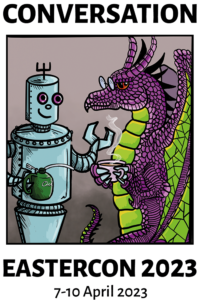
Eastercon 2023

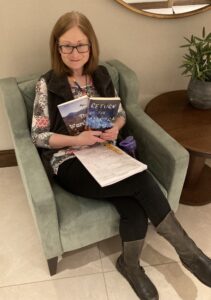
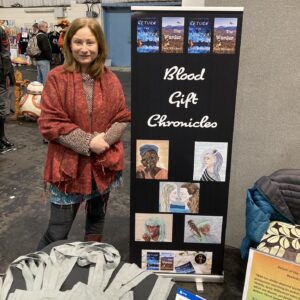
Reflections of a busy weekend in Birmingham for this year’s Eastercon, an annual convention of all things sci-fi, fantasy and horror. It was great to be there in person, representing Blood Gift Chronicles with readings from The Warder.

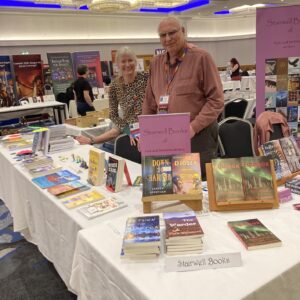
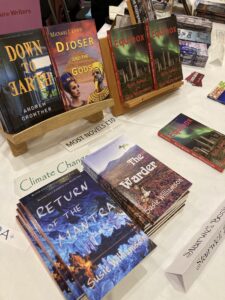
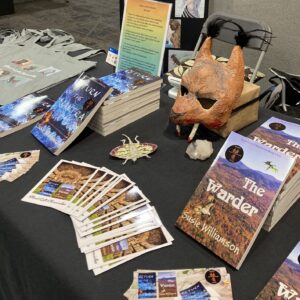
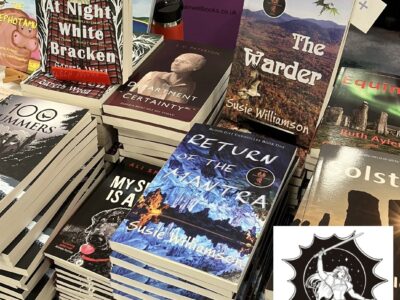
And it was a great chance to catch up with my publishers, Stairwell Books, at home with a fabulous book table in the dealer’s room.

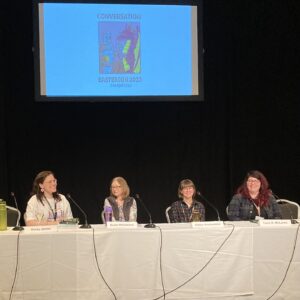
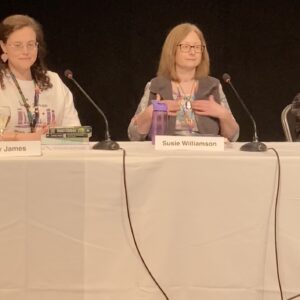
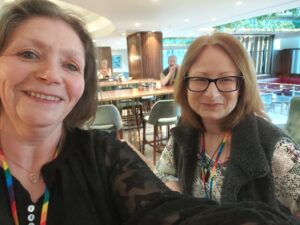
As a writer/reader/watcher of these genres, the fact that I love them goes without saying. But it’s conventions like these that give you the deep dive into a world that knows no bounds, and demands that you look harder, root further, for all we bring as writers, and for all we celebrate as readers. I took part in many great panels, which in themselves is revealing, including topics around feminism, LGBTQ+, young adult, older protagonists, and cats – which proved popular for a nation of cat lovers!!! Plus it was great to meet new people, talk with readers, share ideas, support and encouragement, and be inspired by possibility.

It is always interesting to reflect on the power of representation and its role in fuelling liberation, on a personal level with the potential to translating into wider society. Empowered people seek liberation. And then, while standing on the shoulders of giants, (thank you Ursula Le Guin and Octavia Butler, among others) we imagine anew and expand on ideas of possibility. As far as the environment goes, it has never been more urgently needed. Whilst I may expand on some ideas in future blogs, for now, a special mention to the ever-growing young adult market, a genre for all ages, with enormous range, scope and potential. Personally, as far as politics goes, the future depends on young people, as well as an open line of communication across generations. And what better way to share than through stories.

“We live in capitalism. Its power seems inescapable. So did the divine right of kings. Any human power can be resisted and changed by human beings. Resistance and change often begins in art, and very often in our art, the art of words.” Ursula K. LeGuin

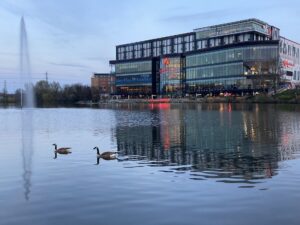
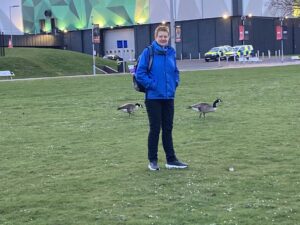
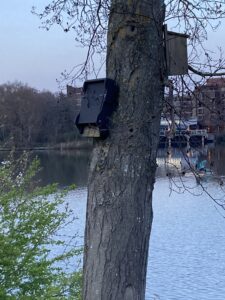
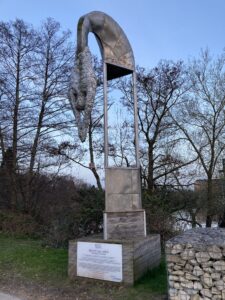
Speaking of the environment, it was a breath of fresh air to appreciate a big pocket of wilding among the urban, from Canada geese at the NEC, to promising bat boxes. And a special injection of art, with lilies on the water, and a sculpture entitled ‘Beyond All Limits’ by Luke Burton, specially commissioned to commemorate the London 2012 Olympics and Paralympics, and dedicated to Help for Heroes.


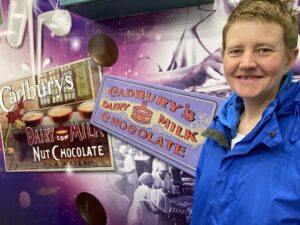
 On a different note, it was a special someone’s birthday on Monday, and since we were in Birmingham, what better way to celebrate than a visit to Cadbury’s World, followed by dinner at TJI Fridays


Goodnight Birmingham
xxx

Stories to Inspire

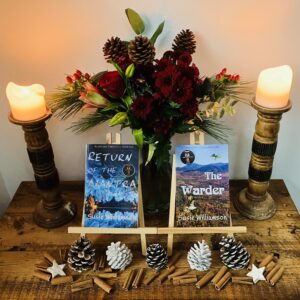
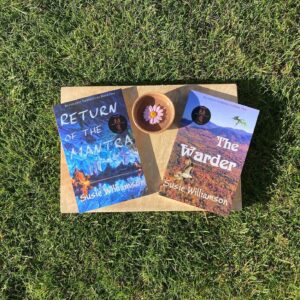
Looking back over two years since the release of The Warder, Book 2 of Blood Gift Chronicles, and it’s been a busy time, visiting near and far with a story close to my heart. Continuing Suni’s journey from Return of the Mantra, and it was a joy to write a young woman finding her way and coming into her own, from a girl searching for justice and her own identity, achieving self-determination, and flourishing into a visionary thinker. In this sequel she is joined by Wanda and Luna, two protagonists who delve deep into the human condition. The world comes alive with wildlife, magic, and a new land with an intriguing and dangerous history
oh, and did I mention, dragons…
Like I said, a story close to my heart.
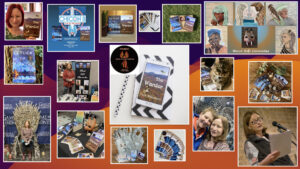
Huge thanks to all of my readers for your continued support, for every review and kind word said, and for every story out there that continues to inspire. Lots to come, and we’re looking forward to tripping to Birmingham very soon with Blood Gift Chronicles.
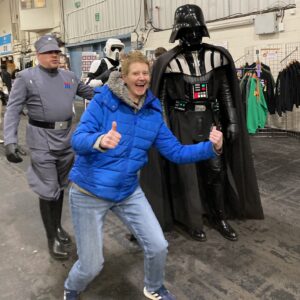
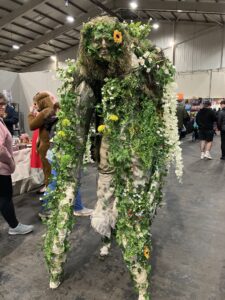
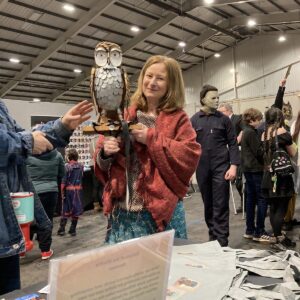
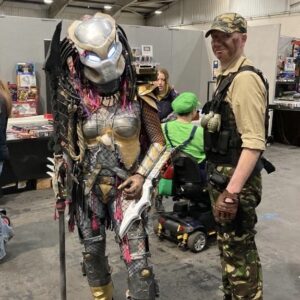
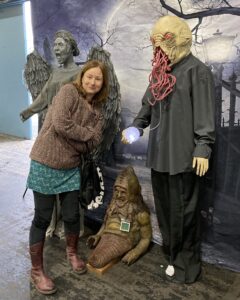
In the meantime, I’ll leave you with memories of a recent Comic Con here in Devon, brimming with stories to inspire…
 
 
Have a great week everyone!

WorldCon 2022 Non-Conforming Women Part 2

After a slight interlude, here is the promised Part Two, to follow my recent post entitled WorldCon 2022 Non-Conforming Women.

Whereas the first post looked at some favourite women on screen, there are some wonderfully inspiring books out there that go a long way to challenge the gender status quo and free all our characters up to be who they want to be. Representation matters and I’m all for subverting expectation to give unique stories and characterisation.

As for the question of how I explore gender in my own epic fantasy series, Blood Gift Chronicles