For the Love of Dragons

Writing is well under way for Book 3 of Blood Gift Chronicles. While living alongside characters who inspire me daily, I am also immersed in wildlife and dragons as I forge journeys through land, sea and sky. It’s everything I love about fantasy fiction, grounded in relatable experiences, whilst offering inspiration, colour and magic; against a backdrop of danger. There is everything to lose and everything to gain, when we embrace the truth of our identity, and look to freedom. Flight offers the ultimate in freedom, in the skies, or swimming in oceans deep. And so I look to dragons, of different kinds.

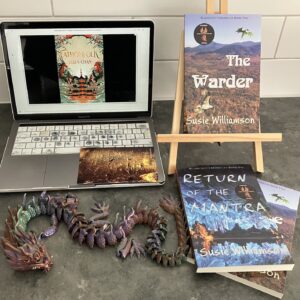
I recently received a gift through the post, a gorgeous postcard featuring the Maeshowe dragon, an intriguing and playful image, ancient graffiti left behind in the Neolithic tomb of Orkney, etched by visiting Norsemen. I love the idea of mythical creatures just waiting to be re-awakened. And I love a new book just waiting to be opened, like my recent purchase, Fathomfolk by Eliza Chan, a title I’ve had my eye on for some time now – sirens, sea witches, kelpies, and a deep dive into Japanese folklore with kappas and eastern dragons, what’s not to love.

And so what is the draw to the ever popular dragon?

Beyond this place, there be dragons,’ the old map makers used to say…

Fantasy requires us to take a leap of faith and step into the unknown, to render our desire for control and open ourself up to a different possibility. The fact we enjoy the genre suggests we’re looking for that kind of adventure. What better way than with creatures that can take flight or disappear into the deepest oceans, that can shape-shift, have intelligence and speak many tongues, that teach us humility, less we choose the path of destruction, or create opportunity to unite behind a common enemy – if a dragon can wipe out an entire army, it will take more than an army to defeat one. Whatever purpose they serve, they tip us well beyond the threshold of the familiar, transcend to a point of no return.

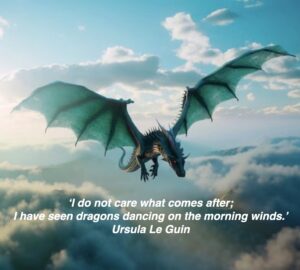
‘I do not care what comes after; I have seen dragons dancing on the morning winds,’ Ursula Le Guin.

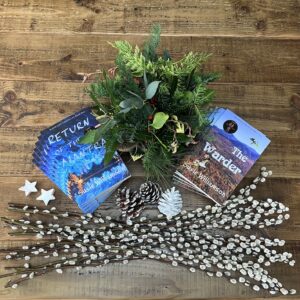
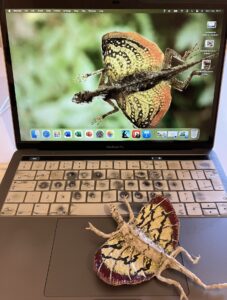
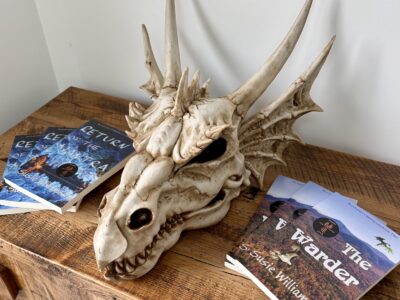
They are also weirdly relatable, since we grow up learning about the giants of history, aka dinosaurs. And of course we know lizards, and there are those that can fly. Flying lizards appear in my WIP novel, and this photograph has been my screensaver for some time, as pointed out by my paper-mache version, companion of the book table.

The feelings that dragons can invoke are also relatable to contemporary issues of climate change, habitat loss and depletion of the species. Ann McCaffery’s dragons are literally allies in the fight against climate change. More subtle, the mysticism in Ursula Le Guin’s dragons in Tales of Earthsea explore the possibility of extinction from the world we know, melancholy at the thought of dragons flying the other wind, leaving behind a world without dragons, a world without the majestic mystery of this awe-inspiring other-worldly magic.

In my series, Blood Gift Chronicles, the theme of power is explored through the hard magic of traditional fire breathers, and the soft magic of water dragons. One power will out, which one, you’ll have to find out, but the aim was never to rid the world of dragons, but rather lean into creation. Exploring these internal and external worlds, opening ourselves up to perspectives of air and sea, considering the power of the otherworldly, gives a vast overview of the world that only dragons can bring. It’s a fly high, and a deep dive, battling internal struggles, fighting powers in a bid for freedom, with the question, if you have fought a dragon, is there any turning back?

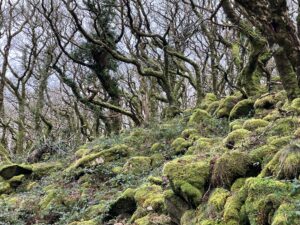
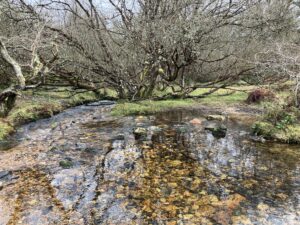
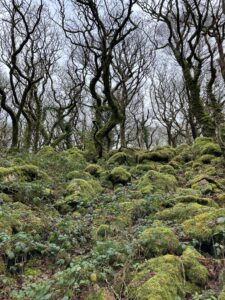
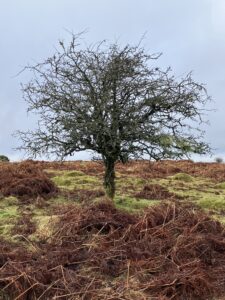
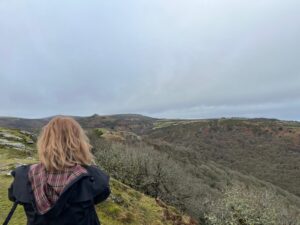
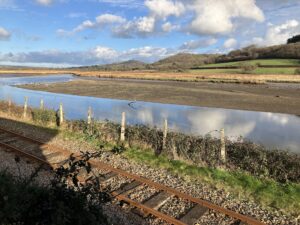
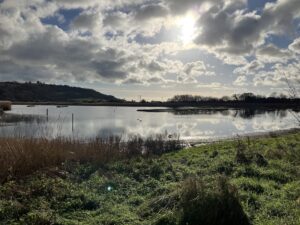
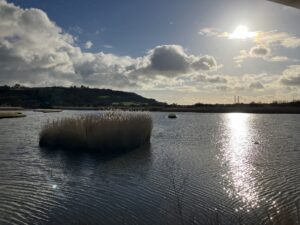
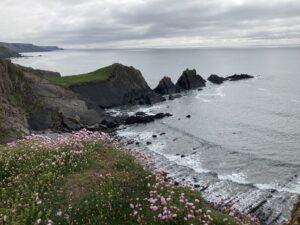
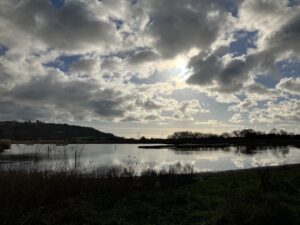
Landscape credit to the coastline of Hartlands, where lies a partly submerged, rocky dragon.

For the Love of Books #33

A Halloween special for the love of books, and two titles for a double dose of heebie-jeebies.

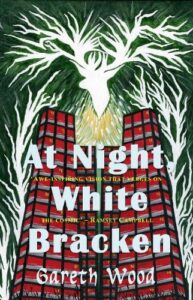
The first title was one I was lucky enough to catch a sneak preview of, since I was asked to paint the cover art. With such a vivid tale, built on imagery that leaves a permanent imprint, it was a pleasure to work a visual to embrace the story.

At Night, White Bracken; by Gareth Wood

Deep in a Midlands high rise estate, smoking hash and supping flat Carling, Danny and Cooper are watching a show about hunters, featuring two men baiting and trapping paedophiles in a modern day blood sport. Inspired, Danny and Cooper join forces with Hickey, a particularly sinister and intimidating individual, and begin laying traps for their first victim, enlisting the help of a vulnerable young woman, Shanice. I appreciated the opportunity that Shanice’s character brought, allowing for moments of tenderness to exist in lives astutely observed.

There is a poetic quality to the writing, with prose alive on the page, perfectly describing the crime and grime, the bleak and the monstrous, in a place where men move in packs like rats among bladed edges of high rise blocks, edged by wire fencing. But as this terrifying and misguided plan unfolds, the world gains mysterious depth.

Danny is the narrator, revealing an intriguing personal backstory that sets him apart. Remembering recurring childhood nightmares, he introduces a cosmic quality that blends the possibility of magic with pallid reality. Realities collide, dread and merriment entwine, in a world of malevolent, sinister, magic, and a horror-filled journey cast in bright white light. The characters are real, and kept me guessing, as edgy as the estate. Streaks of almost beauty reveal humanity that is captivating, made more so by the harsh surrounds. And in this vividly depicted and entirely relatable world, the reveal of magic was the perfect tease to lead the way through the dark twists and turns.

A horrifying and brilliantly inventive, thought-provoking tale.

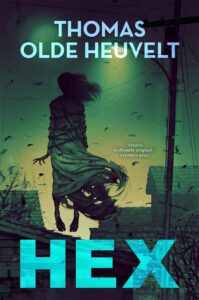
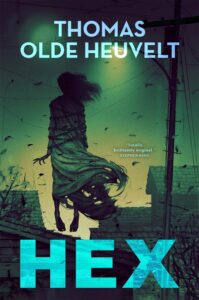
Hex; by Thomas Olde Heuvelt

Hex is a chilling supernatural thriller set in the town of Black Spring in picturesque Hudson Valley, a town cursed by the Black Rock Witch, a seventeenth century woman called Katherine van Wyler accused of witchcraft back in the days of puritanical colonies. Chained, and with eyes and mouth sewn shut, she haunts the streets and enters homes at will. Her presence in daily/nightly life is the norm, which makes it no less chilling, and since the story is told from the perspective of a diverse cast of townspeople, the way in which people relate to her is broad. Some mock and chastise in scenes almost comical, while others are deeply affected, feeling injustices that continue to be committed against her. One resident goes so far as to offer comfort, adjusting chains, speaking compassionately, empathy perhaps born from her own circumstances, while undoubtedly motivated to appease the spirit in order to remain safe from the evil eye. The range of responses is bizarre, and interesting, with one thing in common, no one will open Ms Van Wyler’s eyes.

As residents carve their path for living alongside the curse, a web of ritual and routine is formed, and paranoia and claustrophobia spreads, ratcheting up the horror. I was soon drawn into this creepy page turner, that reveals the truly disturbing dark side of human nature. With relatable characters, dynamic narrative and vivid descriptions that leap off the page, this original story haunts long after the last page is turned.

What are you reading?
The Art of Visual Narrative

A break in the rain sees a burst of crisp autumn sun and the promise of colder times to come, perfect for getting lost in my WIP, Book 3 of Blood Gift Chronicles, adding layers to an expanding world, and (currently) spending time with a character who’s a true survivor and an inspiration – it feels like weaving magic.

But for now, following a breath of fresh air, time to ponder the subject of visual writing, as promised in my last blog. It’s a subject that came up in a panel topic I took part in in August, at Worldcon 2024 in Glasgow, and was of particular interest for me to consider alongside also being an artist: visual imagery and colour are important to me, as well as the process of telling stories through various mediums including narrative, art and poetry.

But to start, what do we mean by visual writing?

Put simply, visual writing brings narrative to life in a way that forges connections with the reader, evoking an emotional and visual response that triggers a mental image in the mind of the reader. There are various aspects to consider, including characterisation.

Believable characters are the heart of the story, through which readers connect with both the story and the author. We need characters that readers can connect to, characters that inspire, intrigue, excite or frighten, or that we can empathise with and relate to. We need them to leap off the page, and so as writers we need to know them, their history and backstory, their strengths and flaws, what motivates them, what challenges them, how they express themselves. Social context and power structures inform how characters move through the world and what freedoms they have. Someone in a high ranking position might have freedom to speak up, someone in a low ranking position might have to stay silent. In my novels I have a character who’s impulsive and overconfident to the point of being reckless; a character who is misunderstood, powerful, burdened, and courageous; a character filled with self-doubt who evolves into a steady leader; a character whose inner struggles go unnoticed and it almost costs him his life.

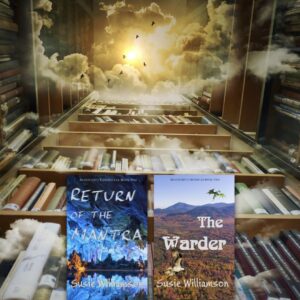
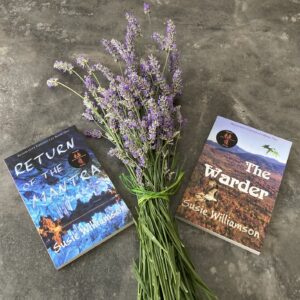
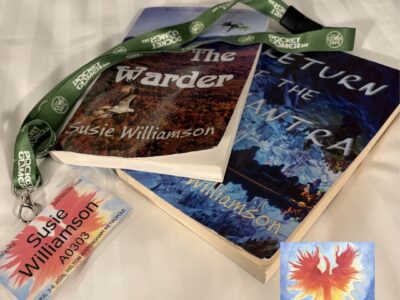
I reveal the internal worlds and emotional landscapes, highlighting what is at stake within the drama. The psychological dimension is a hook for the reader, while taking care to describe just enough to maintain pace. At the beginning of The Warder (Blood Gift Chronicles Book 2), an early scene involves a girl who sees a dragon in the mountains, and consequently sees and feels herself burning in its fire. And then she realises that there is no dragon. Another character sees her appearing crazed. I allow the reader space to reflect on the girl’s traumatic confusion, and what the consequences might be, rather than attempting to over-describe and explain, which would have unnecessarily slowed the pace.

And lastly, the environment. Within my fantasy series, I move through mystical deserts, rugged mountains, lush forests, and I’m careful to describe just enough to support the scene from the viewpoint of the character in the scene. I have a character who is intimately connected with animals, and so sees the world around him through his connection with wildlife. I have characters who see things in shadows, and so their perspective has another dimension to focus on, and a whole different mood. I have a character who’s very connected to her ancestors, and so looks for experiences they may have had. And a character in book 3 that I’m still working on, and we’re moving into the realms of shapeshifting, which completely alters the perspective. Each environment, scene, and character have their own mood, colour palette and tone, (maybe it’s the artist in me). It’s interesting to switch between contrasting scenes, switching colour and mood in a way that livens up the narrative, bringing it to life for the reader. Overall, as readers, what we find visually and emotionally evocative will differ, and what is mentally thought-provoking will be dependent on our interests.

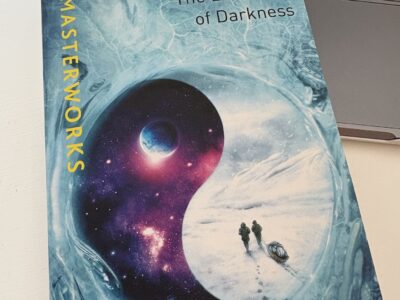
And so, I will leave you with just a few recommendations that I found visually and emotionally evocative, memorable stories that left that all important lasting impact.

What are you reading?
Worldcon 2024

At last, time to sit back and reflect on a very special trip in August, all the way to Glasgow 2024, A Worldcon for Our Futures. This was the 82nd World Science Fiction Convention brought to Scotland, and what an inspiring few days it was.

Worlds within worlds took shape in imaginative architecture nestled alongside the river Clyde, a wonderful place to take a break and reflect, with time enough for a stroll downstream and castaway on the Tall Ship, Glenlee, delving into the truly extraordinary stories of life on board sea voyages not for the faint-hearted. Research comes in many forms for writers, and immersed in the ship’s atmosphere, I let my imagination wander to an incredible journey one character of mine is forced to make. But my work-in-progress novel is another story.


Back to the convention and it was great to catch up with familiar faces, meet new people, and take part in panel discussions examining the length and breadth of these fascinating genres.

It was a pleasure exploring the connection between being an artist and a storyteller, discussing the process of being a visual writer and storytelling artist, and how the visual, and narrative, blend into a similar space, all through interwoven creative mediums. Surrounded by so much colour, there was a lot to inspire.

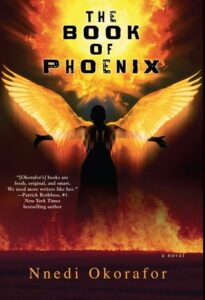
More on visual writing another time, but one very special guest of honour, a current favourite author of mine, Nnedi Okorafor, is a writer whose work I find particularly visual – colourful, striking and memorable. It was a wonderful opportunity to see her interviewed in person, to put a face to words I have poured over. A pioneer in many ways, her personal story is inspiring, as is all she continues to achieve through her work, a woman who stayed true to herself and her convictions, who defied genre (or at least white-centric, first world genre norms), and in doing so, we are treated with Africanfuturism and Africanjujuism. I find her work to be unapologetic, strong, colourful and pushing boundaries in exploring a vibrant world.

Another panel I had the pleasure of joining explored diversity of a different kind, from queer triumphs to utopias and everything in-between. It’s a wonderfully explorative theme to consider, stories where marginalised people are being framed as the hero, getting to the heart of identity through looking closely at a character’s intersections, glancing back at history to support understanding, as well as imagining anew. Considering the interplay between stories and the real world, how one influences the other and vice versa, we need those new imaginings, and as a writer I work alongside my characters to see their hopes realised. Themes of identity, self-determination and empowerment feature in my work, since I find that conceptualising hope stems from steps taken towards our own authentic standing in the world. From awareness of our identity, we invest in contributing to others being able to flourish, including the natural world since our futures are entwined; we are a part of nature. It’s a familiar journey for me, one that my characters walk, as they explore collaboration, connectivity and shared values.

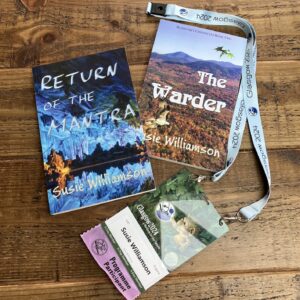
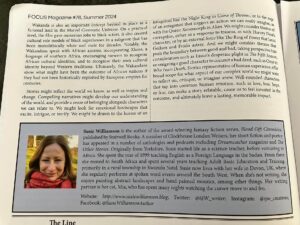
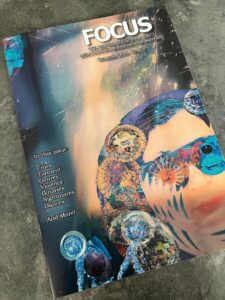
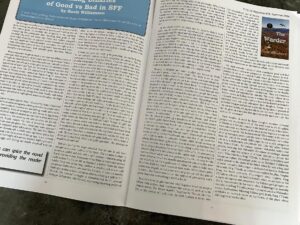
The dealers room was a joy. It was great to see piles of the British Science Fiction Association’s Magazine, Focus, where a recent article of mine is published, entitled Breaking Binaries of Good versus Bad in SFF.


And of course it was a wonderful chance to catch up with my publishers, the lovely folks of Stairwell Books, as well as pick up a few titles to come home with for my ever-expanding to-read pile.

And so to end with a question: what are you reading?
Octavia Butler & the Freedom of SFF

It is just over a week ago that I returned from the International Science Fiction Convention, Worldcon 2024 in Glasgow, and what a magnificent few days it was. I have lots to catch up on and share, the sights and inspirations, but first I want to begin with a few thoughts on my latest read, a woman who kept me company for the convention, whose words have been ringing in my ears for many years, the wise and deeply human, Octavia Butler, whose ‘The Last Interview’ was a joy to read.

Octavia Butler was a survivor, a dreamer and a loner. She was painfully shy as an adolescent, dyslexic, and ‘probably’ gay was her literal answer to a direct question. Bloodchild was about male pregnancy. She enjoys working in SF for the freedom it offers, the ability to go into any technological or sociological problem and extrapolate from there. Her work is underpinned by concepts of power, told in worlds of different races, sexes and cultures, with interest in powerless people gaining power. A theme I very much identify with as a context for my own work.

I first read Octavia Butler when I was a young teen, starting with Kindred. Dana Frankin, a Black woman from an interracial marriage in LA in 1976, is mysteriously and repeatedly plucked back in time to 1824 Maryland and to a moral dilemma involving her white ancestor. The author describes how it was purposeful to give Dana a white husband, to complicate her life, and it was purposeful to make her lose her arm, to demonstrate that she could not come back whole from those experiences. The perspective is told from the viewpoint of not what it might have been like for her ancestors, but rather what it might be like for her, how slavery might reshape her emotionally, whether the compromises and capitulations she would have to make might destroy her, and if not, why not?
Octavia Butler speaks of striving to tell a good story, to take the reader to a world they haven’t seen before, one she has enjoyed creating. She subverts expectations about race, gender, and power, incorporating strong women, multiracial societies and aliens who challenge humanity’s penchant for destruction. In Bloodchild, she wanted to subvert expectation of the invasion story, often represented as humans colonising other planets and either facing aliens who resist, or who submit and become good servants. The author created another possibility in the Oankali, a centipede-like creature that you’re not supposed to regard as evil. It is a species that do not force or rush humans into mating but rather try to bring them in gradually. And in Adulthood Rites, the Oankali become convinced that they cannot destroy the humans who participate, and that humans deserve an untouched world of their own, even if it is Mars.

Octavia Butler advocated for write what you care about, rather than write what you know, (or what you think you know, which is often just regurgitating ideas you have been told, ideas you might tell yourself you believe, when in fact you don’t). Writing can push back against human laziness that is prone to stereotyping as a form of shorthand, that might be a way to deal more with the things we care about and less with the other, but it is reductive and can prevent us from discovering things we could want to know.

Last word:

“Feminism is freedom. It’s the freedom to be who you are and not who someone else wants you to be. And science fiction? Science fiction is wide open. You can go anywhere your imagination can go.”

xxx

For the Love of Books #32

A nod to my last post themed on nature, and a recommendation following a gorgeous day out in Dorset at Abbotsbury Swannery. Tipping a dramatic coastline, this unique and natural wildlife habitat is the only place in the world where you are able to walk through the heart of a managed colony of free-flying, nesting Mute Swans. And what a place to live – it’s no wonder they choose to stay.


And after a big breath of avian sea air, it’s back to the realm of stories with Comic Con. Star Wars is clearly a favourite, and the full size array of robots through the franchise. They may be made of metal, but they are far from expressionless.

The emergence of AI and its interplay in the art world is a big topic. From droids, space travelling humanoids, alien terminators, and colonising machines set to take over the world, robotics and AI have long featured in our stories. Recently I was introduced to a fascinating series, with a whole new take on this vast subject:

The Subjugate; by Amanda Bridgeman

In a watchful world where humanity is complemented by AI, cities are ruled by security companies, yet crime and murder are still commonplace. The story features two detectives, Salvi Brentt and Mitch Grenville, each one an interesting character in their own right, with intriguing complex backstories and a dynamic that at times complimented the dis-ease of the thriller, which I found compelling.

The setting of the story is well-drawn, an imagined future where ethical limitations of AI are subtly observed, with talking robo-cleaners and dedicated AI prefilling data of transcriptions and interviews, yet always with a human hand to sign them off to ensure their eligibility in court. Yet some pullaway communities are resisting technological advances. Just outside the city, the unincorporated community of Bountiful is one of the leading pullaway communities, and one of the most religious. Founded in 1934, it is a town built on religion, populated by the Children of Christ. There’s no internet, mobile phones or computers, although it does have a close relationship with the nearby Solme Complex. The Solme Complex houses violent criminals called Subjugates, who undergo extreme treatments involving religion and technology, and include painful chemical castrations and implanted neural technology which can be used to shock into submission. There are interesting themes around redemption, forgiveness and freedom from sin, with aptly disturbing methods. Subjugates who are successfully converted over the course of several years of ‘treatment’ are called Serenes. They are released unsupervised but with the neural implants recording electrical activity in the brain. When heightened emotion is detected, it triggers a visual alarm in the silver crown worn by Serenes, called a halo.

Following the discovery of a young woman’s body in the community of Bountiful, the two detectives head out to investigate. A discovery of biolume at the scene, bacterial natural lighting, leads them to the Solme Complex, with Subjugates the prime suspects. As the investigation continues, further layers of the world are revealed, with the relevant question of ‘how far is too far’ with technology explored through inventive examples, including augmented realities where avatars are free to play out forbidden desires. There are questions around, just because you can, should you, and are we all slaves to something whether it be religion, technology, or law enforcement? And there are themes around how this all connects to freedom and control. In a bid to be free, do we just end up creating further structures, disciplines and controls? Is freedom truly possible in a world of corruption? I enjoyed the exploration of these big questions, the intriguing future dystopian world, and contrasting characters leading this fast-paced sci-fi thriller that kept me wanting to know more.

The Sensation; by Amanda Bridgeman

Salvi Brentt had killed a man, and he had almost killed her. Under psych review she was cleared for active duty and has a new partner, the department’s dedicated AI, Riverton. A case opens when the body of 34-year-old Devon Barker is found in Sensation. A woman, Myki Natashi, is discovered unconscious in the bedroom by police, who had responded to a domestic disturbance. Myki doesn’t know what happened, and only remembers dinner the night before with Devon. Vincent Calabri was seen in the area, a man with a small rap sheet in the employ of detective Francis Melon, who is Myki’s ex-boyfriend of 3 years. Melon works in the financial industry, a known acquaintance of John Dorant, affording him loose ties to organised crime, and friends in high places. This case is also coupled with the murder of undercover officer, Caine, and the disappearance of the Chief’s daughter into a drug gang.

As in the first book of the series, I enjoyed the character arcs, and in particular the main character, Salvi, a complex woman with a past, and strength to face herself and get the job done. She is still seeing her old partner, Mitch, which was an interesting aspect of her character development in the first book, and continues to add interest in this sequel. Previously, Salvi had faced two serial killers, and one was still alive: Edward Moses, Subjugate-52, locked up in the Solme Complex. Subjugate-52 has been asking for Salvi. He hasn’t received what was promised him after helping Salvi in the last case. He was promised to become a Serene, but Salvi disappeared on him, renegading on her word. Now she is concerned what level of deception he is capable of, and how he might manipulate access to the wider world.

The development of the role of AI in this sequel was particularly interesting. Talking robo-cleaners have names, and the AI, Riverton, is humanised through friendly interactions, showing apparent consideration to which Salvi responds in kind. Hackers cause chaos to evidence by wiping CCTV footage, and more sinister, they hack neural implants that leave a brain wide open to abuse and full-on takeover. A broad range of available technology sees a further reduction in human/human interaction, with drone surveillance, VR headsets and tasers, robot dancers, and holographic forms. Neural tech is also injected in drug form, rendering a person entirely helpless to being used as a sex droid. There are interesting questions here, since the drug lowers a person’s inhibitions and heightens sexual desire, leading to sex. But this is under the influence of a drug, illegally administered without consent, and therefore constitutes rape.

Tech used to keep subjugates in line can equally be used to keep slaves in line, adding a further, compelling sinister edge. Salvi is on a deadly mission to uncover truths, and among the truths are: where do we draw the line, who is good and who is bad or is society just lurking somewhere between, what is right and wrong and who has the right, who is hunter and who is prey? Technology affords power, and with it comes responsibility, but is anyone responsible enough? These are questions I am left with, making this an inspiring read.

What are you reading?