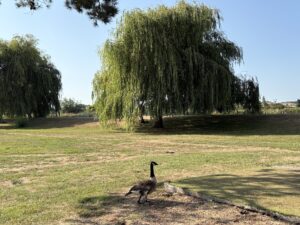
Days slip into August, WorldCon is on the way, a hedgehog friend has moved into the garden, a lone Canada Goose with a broken wing finds support riverside, plenty of writing is underway, as well as reading. I don’t usually publish reading blogs side by side, but I’ll make an exception, for the special times when what books we might choose from the shelf intersect with life. Perhaps that is always the case, although I’m speaking of some happy, by-chance crossovers brought by the author who keeps on giving, Ursula Le Guin.
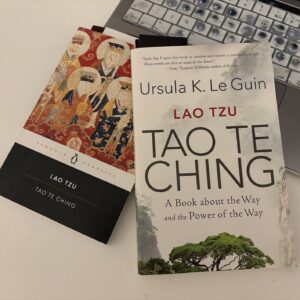
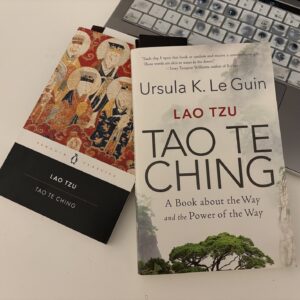
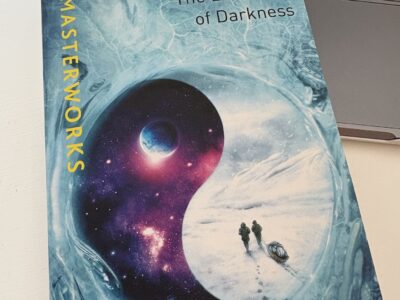
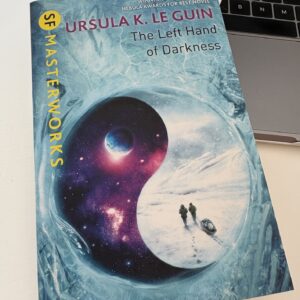
I had thought to re-read The Left Hand of Darkness a while ago, a book I remembered as thought-provoking, and layered. I wondered what more messages I might receive this time around. I started, I put it down, I wasn’t sure why, time went by. Meanwhile I had stumbled on Tao Te Ching by Lao Tzu. No sooner was I graced by Lao Tzu’s philosophy, when I realised Ursula Le Guin had written her own translations in her writings, Lao Tzu, Tao Te Ching. Reading these texts side by side, the layering of messages seeped through into the moment, and I received my first new realisation of The Left Hand of Darkness: it’s so obvious, with the yin yang symbolism on the cover, but only now was I able to feel the inspiration that moved the stories. This time around I devoured the pages, following the stories as told by Genly Ai, transcripts from his diplomatic mission to the alien world of Winter in the lands of Karhide. The narrative is hugely colourful, the language engaging and evocative, revealing an intriguing and complex world, alongside Genly Ai’s internal dialogue.
This is a wonderfully imaginative and intuitive journey, revealing the light and shade, and the flow of energies through lands and stories gathered along the way. The author’s attention to detail on human complexities, the ability to reflect and switch the lens on commonplace themes makes for a captivating narrative. There are reflections on othering, feeling like an outsider, the work towards seeing through the eyes of others rather than through our own, thereby decentring the experience of the narrator and moving to empathy. There is a timeless quality to the messaging, relevant to contemporary themes and challenges of patriotism and nationalism, with thoughts offered about isolationism being rooted in fear. There are offerings of karmic shadows and the times to walk away, while owning everything. There are warnings of foretelling, and discussion of balance, knowing when to take action, and understanding when action grows unprofitable, when to seek information and when information grows unprofitable, and knowing when to simply sleep.
The Left Hand of Darkness was first published in 1969, and I feel in places some discernment is now also necessary in the reading. With renewed and deeper understandings, Ursula Le Guin herself reflects on her writing career, in places recognising how she would approach some things differently if she were to write them now. The evolving dialogue between author and work in itself is in keeping with themes in the aforementioned works: the process of life, the lessons learned, and the timeless quality of a perceptive, intuitive and insightful lens.
If you’re so inclined, I’ll leave you with a link to an interview Ursula Le Guin gave on her thoughts and relationship with Taoism. Click here.