Tag: writer’s life

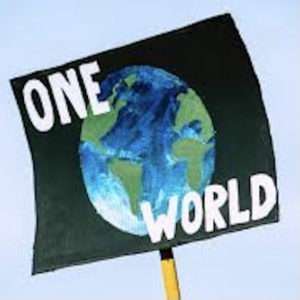
One World

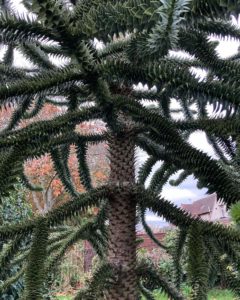
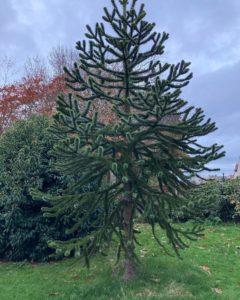
Just over two months in the new house and it’s feeling like home. Mia continues to be outwitted by the resident squirrel on its hunt for buried nuts, and I’ve discovered a wonderfully bizarre monkey puzzle tree on my regular walk.
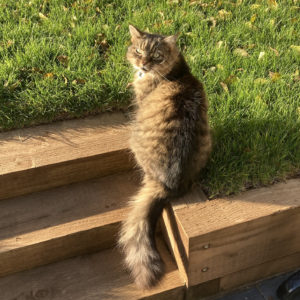
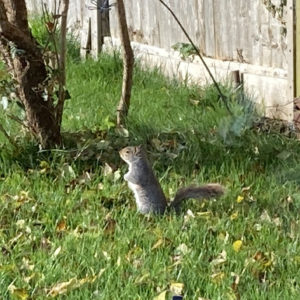
In other news, the street is being put on trial for food waste recycling. In the spirit of every little helps the environment, we’re all hoping it stays. Of course, we need many more big helps, and like people all over the world, I watched the events of COP26 unfold on the news. And so, to continue with last week’s theme of climate change, I thought I would share a recent poem inspired by global talks and the dedicated activists demanding we all do better in fighting the looming calamity.

Fight the Calamity; By Susie Williamson

Are humans really the superior species,

Skilled in reasoning, language, solving difficulties?

Introspection is seen as one of our strengths,

So what came of the Paris Agreement?

Did we tighten our belts, get smart, or continue in decadence,

Turning a blind eye to owed recompense?


Cop26 comes round and the truth will be told,

To climate activists around the globe.

The suited and booted leading with false ideations,

Reckless in the knife-edge survival of Africa, and those island nations.

It’s not 1.5 or even 2, but a roadmap to 2.7 degrees,

Yet again, the same nations will be on their knees.


Or under water; some are already there,

Vanishing islands and coastlines, but with new gas fields, who cares?

Until Mia Mottley steps up and takes to the mic,

Calm and considered, but with words set to strike.

This PM of Barbados speaks for those without choices,

For the powerless, angry, despairing voices.


Her message is clear, her intent at the heart,

National solutions just don’t work.

Are we really so blinded and hardened, deaf to the cries,

So willing to turn our backs on countless lives?

So adept at othering, we seem to be,

Price tags on people, scrap humanity.


We talk peace and prosperity here in the west,

A blanket omittance of nations oppressed,

Prosperity, illusion if only one third prospers,

While the rest of the globe cowers and suffers.

In the face of calamitous threats, life under siege,

When will global leaders fess up and lead?


Will they mourn us on the front line? Eddy Grant once said.

Not when pound signs are favoured over existential dread.

Voice, ambition, action is lacklustre so it seems,

In solving global crises of climate refugees.

Will the path of greed harvest our common destruction?

Or will we choose survival via temperature reduction?


There’s no time, we’re at that fork in the road,

The train’s ready, horn blasts, all aboard!

Code red G7, G20, wake up at the COP,

1.5 to survive, 2 degrees and no backstop.

Just death to Barbuda, Kenya, Mozambique,

Antigua, Fiji, The Maldives,

Try harder the people of Samoa holler,

Don’t we treasure Barbados and the people of Dominica?

Tuvalu is sinking, it’s happening now,

Don’t sigh, don’t shrug, don’t sit back and ask, how?

Central banks work in trillions, too huge to fit in our heads,

We have answers, resources, so make a watertight pledge.

Sign up to the global peace army,

Say no to death, and yes to humanity.

***
A Splash of Colour

There’s a familiar sight outside the window of my writing room: blurred by heavy rainfall, beyond the rooftops of red brick houses, trees are blowing in a blustery wind. While searching for inspiration for tomorrow evening’s open mic, I thought of May’s challenging weather, and came up with my reading: The Story of the North Wind. It’s actually an extract from my novel, The Warder (Blood Gift Chronicles 2). In the book, Suni is a storyteller, among other things, and The Story of the North Wind is a story she tells. It is a fable from the land of Shendi, the setting for my books, and with nature being the theme for tomorrow evening’s open mic, the fable fits in well.

Transformation

I’ve been busy with edits for The Warder, honing in on the detail, polishing, steadily working towards publication. There’s a theme running throughout this novel: Transformation.

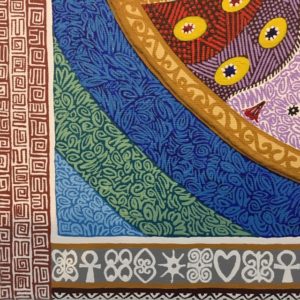
Prior to publication of Return of the Mantra, brainstorming book cover ideas with the publishers, I came across Adinkra symbols from West Africa. It’s not an idea we went with, but I surprised myself, managing to reduce a story to one word. I have three stories so far in the series, Blood Gift Chronicles:

Staying Connected

I’ve always felt like a citizen of the world, now more than ever with the growing threat of coronavirus. In these strange times it’s not quite business as usual.

During lockdown, I am grateful that the weather is being kind, and feel lucky that we live where we do, just a stone’s throw away from the river Exe. Remembering all the things I am grateful for, a walk to the river is a regular feature of each day.

Female Characters

It’s been a busy few days, beginning on Saturday when I went along to Wincanton Book Festival. Reading an extract from Return of the Mantra, I chose the scene when Suni first meets a mysterious young boy who doesn’t speak. It reminded me of the tenderness that develops in this parent/child type relationship; a relationship that continues to grow in the sequel. Needless to say it was a lovely day promoting all things books, and as I chatted to interested people, I thought more about the complexities of my female protagonist, a girl who struggles to find her place in the world, who survives and adapts and learns to fight to save her homeland.

Spontaneous

Following my last blog, The Human Condition, I was left thinking more about the ingredients that make life, and stories, interesting. The unexpected plot twist, the random event, stepping outside the familiar to embrace something new, to learn, to experience something fresh. It’s one of the reasons I like cities, or at least ones which ooze the diverse nature of humanity.

The Human Condition

If a novel was good, would you care if it was created by Artificial Intelligence?

Inspired by an article in the Guardian, click here, this was a question posed a few weeks ago by Devon Book Club, a weekly forum on Twitter discussing all things books.

My response was one of resistance. My exact words were, ‘This is so inhuman it makes me shudder’.

Quiet Reflections for a New Decade

Tuti Island

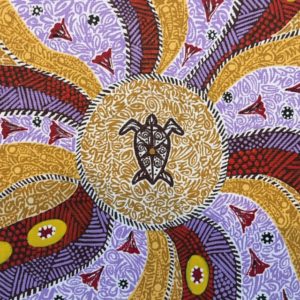
Two decades ago, or thereabouts, I was in the Sudan. Last year, after returning my revised manuscript to the publishers, I thought about a snippet from life in North Africa, and a place called Tuti Island. The snippet begins with a walk along the river Nile, where I spotted some boys tormenting a small turtle they had fished. Feeling sorry for the turtle, and possibly unwisely, I handed over a few Sudanese pounds in exchange for the turtle. I headed off down the river, intending to release it, but everywhere I went, the curious boys followed. Unable to find a quiet spot, I took the turtle home, filled the sink with water and stones, and fed it flakes of fish. It wasn’t ideal, but then I heard about Tuti Island, a nearby place which friends were sure would offer a quiet spot for releasing the turtle. So one day I put the turtle in my basket, caught a bus, then a boat, arriving at the small island situated where the White Nile and Blue Nile meet. I found a deserted strip of sand, placed my turtle in the water, and watched it swim to freedom.

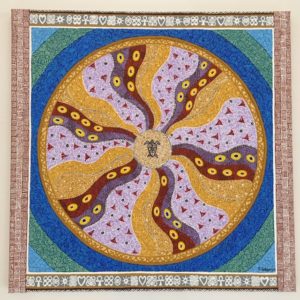
I never forgot that island, or the colours and designs the Sudan inspired. And so my recent painting is titled ‘Tuti Island’.

Christmas and New Year have been a series of quiet reflections. Following a year of ill health and loss, it’s a comfort to slow things down, to take deliberate note of the small details, and breathe the fresh air. With its dark evenings, crisp air and sodden ground, winter feels like the perfect time to just take the time, to take stock, to gain a wider perspective, to remember that the moment is now to create what we choose.

As a writer who also indulges in painting, I am no stranger to the blank page, and the blank canvas. And yet perhaps it’s never really blank to start with. We create, and we recreate, capturing moments, thoughts and lives we’ve known and returning them to us in fresh new forms.

The last decade saw my first novel published, the new decade promises more. So much of Return of the Mantra was inspired by life in Africa: people, places, situations I had known, recreating the real into an almost unrecognisable fantasy. The Warder picks up the story ten years on, and by this time it really does have its own life and momentum. I was particularly encouraged to see a recent comment on Twitter from a reader, saying how much they loved the character, Wanda. He was inspired by orphaned children I had known, out of a desire to create an unlikely hero, a gifted young boy. In book 2, aged 18, Wanda takes a more prominent role. Together with his female counterparts they are exposed to a land beyond their shores, and so continues their journey in understanding that the world is not a dichotomy of black and white, good and evil. Rather, it is shades of grey, cause and effect, where personal growth and self-discovery are essential in realising the effect each character has. Not too unlike the real world.

And on that note I wish you a Happy New Year and a peaceful new decade.

Reach for the Stars

My lovely partner in life, Kate, gave me this card many years ago, when I completed an early draft of Return of the Mantra. Writing a book and the struggles it entails has been described in many ways, but I love this idea of attributing it to a tortoise catching a frisbee.